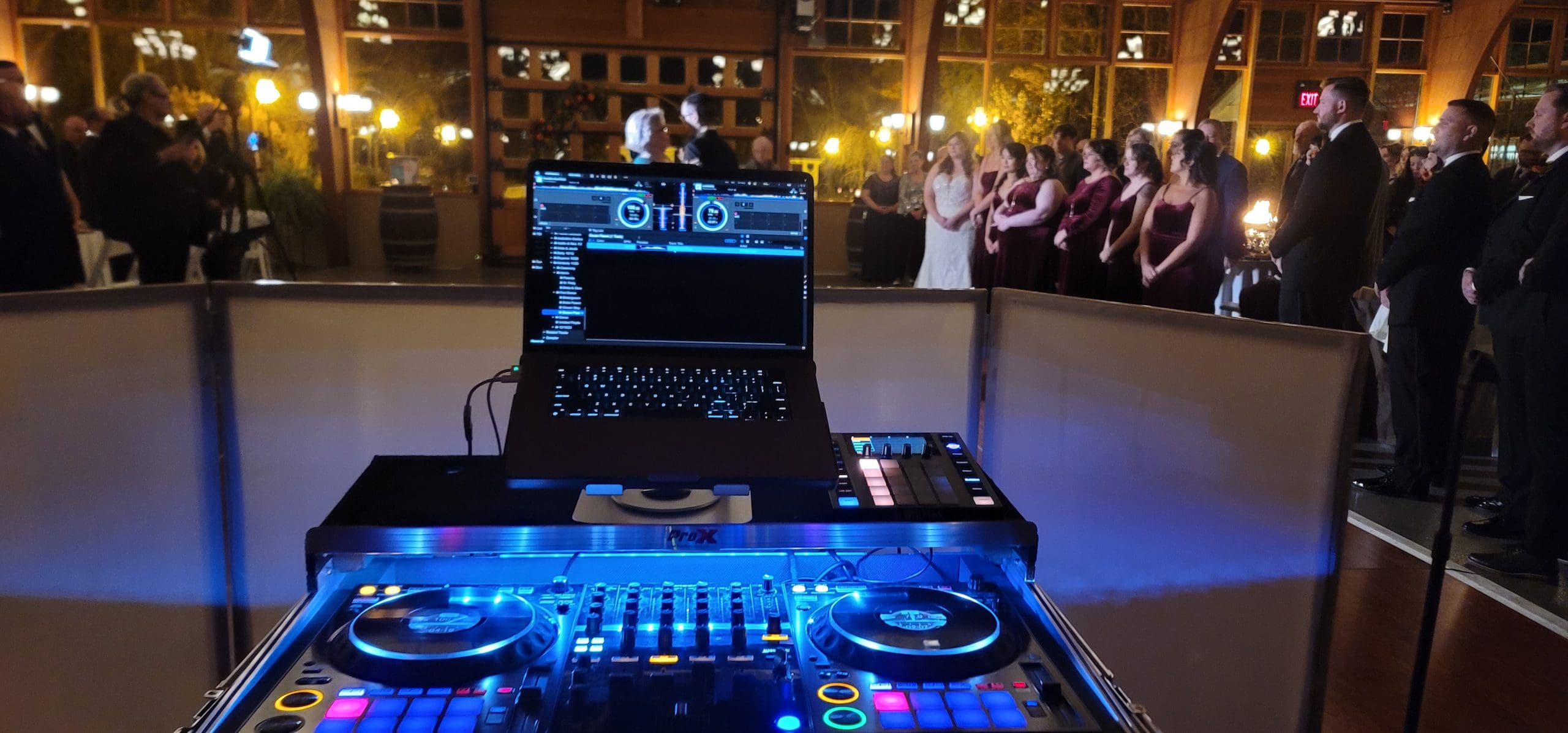
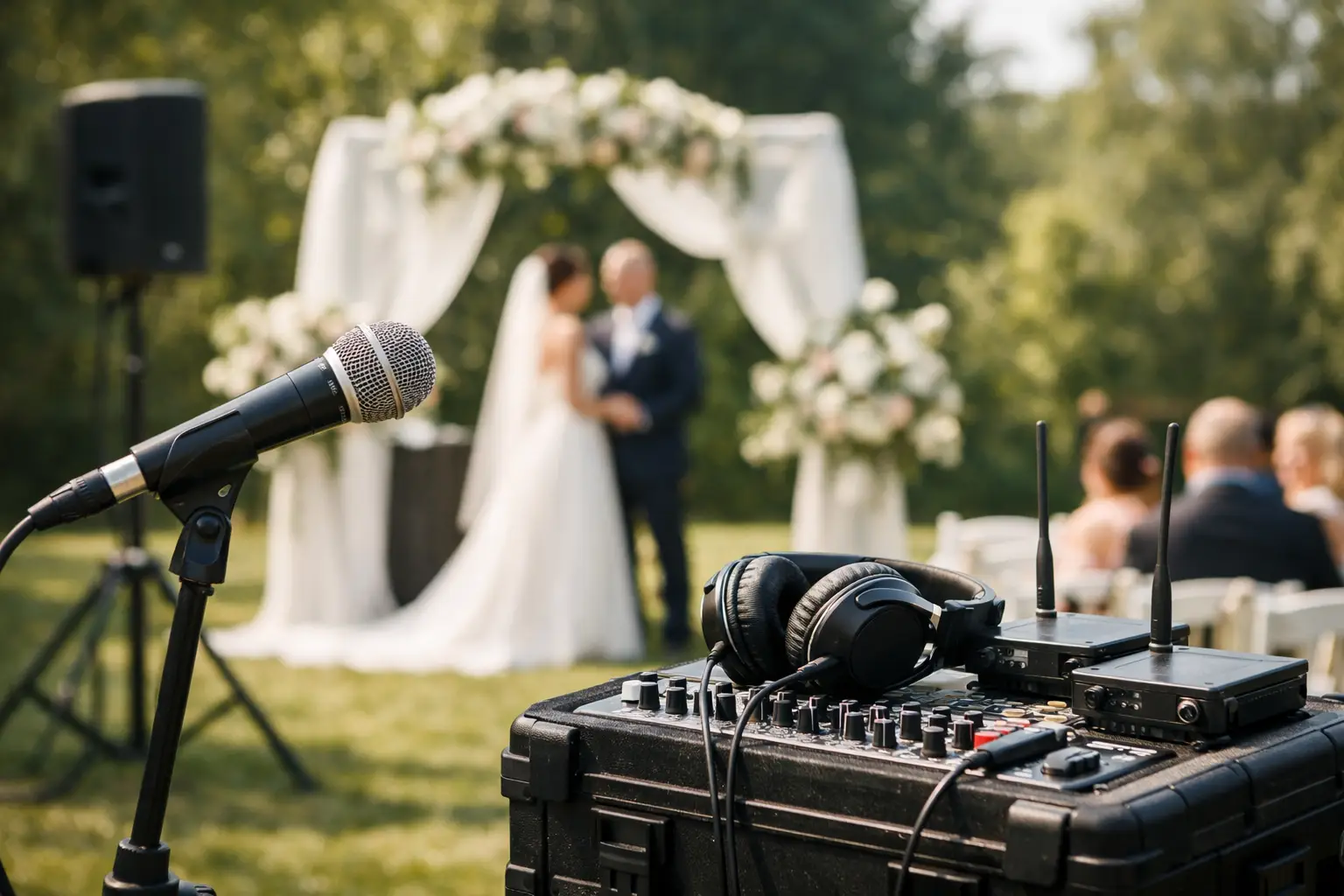
If you have ever been to a wedding where the front row heard every word but the back row heard wind, static, and guesses, you already know why wedding ceremony audio setup matters. The ceremony is the one part of the day you cannot redo in real time. Your vows, your officiant’s welcome, your readings, and your processional music all need to come through clearly, not just beautifully.
That is where couples sometimes get tripped up. They spend months choosing songs, writing vows, and building a timeline, then assume a single speaker and one handheld mic will cover everything. Sometimes it does. Sometimes it absolutely does not. Outdoor ceremonies, large guest counts, waterfront venues, and bilingual ceremonies all bring different audio needs, and getting them right has a real impact on how the moment feels.
What a wedding ceremony audio setup actually needs to do
A strong ceremony sound system is not about making the event loud. It is about making it intelligible. Guests should hear the officiant without strain, understand the vows without leaning forward, and feel the music without it overpowering the moment.
That usually means balancing three things at once: speech clarity, music control, and reliability. Speech is the hardest part. Music can cover a lot of flaws, but voices expose them immediately. If a lavalier mic rubs against clothing, if wind hits a microphone, or if the speaker placement causes feedback, everyone notices.
A good setup also needs to fit the ceremony style. An intimate indoor ceremony for 50 people has very different demands than a 200-guest outdoor ceremony with a long aisle and a live reader. The right answer is rarely one-size-fits-all.
The core pieces of a wedding ceremony audio setup
Most ceremonies need the same basic building blocks, even if the scale changes. You need at least one reliable sound source for music, properly placed speakers, and microphones that match the ceremony format.
For music, the system should handle prelude, processional, interlude, and recessional tracks with smooth volume control and clean cueing. Nobody wants the processional song to start with an ad, a notification, or 12 seconds of silence because someone is unlocking a phone.
For microphones, the best choice depends on who is speaking and how formal the ceremony will be. Officiants often do well with a wireless handheld or a lavalier, but each has trade-offs. A handheld usually sounds stronger and is less likely to pick up clothing noise. A lavalier is less visible and keeps hands free, but placement matters, and outdoor wind can be a problem.
For vows, some couples share one officiant mic, while others add a second microphone so every word is captured more consistently. That becomes especially useful when the couple speaks softly, turns their heads, or has private vows they still want guests to hear.
Speaker placement matters just as much as equipment quality. The goal is even coverage, not raw volume. Speakers should be positioned so guests hear clearly without blasting the wedding party in the front. In tighter venues, too much speaker power can actually make speech less clear because of reflections and echo.
Indoor vs. outdoor ceremony audio
This is where planning gets real. Indoor ceremonies usually benefit from some natural sound reinforcement, but they also introduce hard surfaces, echo, and venue restrictions. A ballroom, loft, or church may already have sound quirks that need to be worked around.
Outdoor ceremonies remove some of those reflections, but they create a new set of issues. Wind is the obvious one. It can wreak havoc on microphones and make even a quality system sound rough. Distance is another factor. In an open-air setting, sound does not bounce back the same way, so guests farther out need proper speaker coverage.
Power access also matters outdoors. If the ceremony site is separate from the reception space, the audio team may need dedicated power runs, battery-supported equipment, or a completely separate setup. That is one reason ceremony audio should never be treated like a casual add-on.
If your ceremony is on a beach, golf course, rooftop, or park-like property, ask specifically how the setup handles wind, uneven terrain, and distance from the nearest outlet. Those details decide whether the system performs when it counts.
Microphone choices and where couples make mistakes
The most common mistake is assuming one mic is enough for every scenario. It can be, but it depends on the officiant, the couple, the readings, and the layout.
If your officiant projects well and invites you to repeat vows close to the mic, one microphone may work fine. But if your ceremony includes multiple readers, a unity ceremony, bilingual moments, or a soft-spoken couple, extra microphone support can make everything cleaner and less awkward.
Lavalier microphones can be great for officiants because they allow natural movement and keep the look polished. Still, they need careful placement. A poorly clipped lav can pick up breathing, jewelry, hair movement, or fabric noise. Handhelds are more forgiving sonically, but they can feel more visible in photos.
There is also the recording side to think about. If you are hiring videography, clear ceremony audio helps the final film as much as it helps the guest experience. A mic that sounds acceptable live may not always be the best source for recording. That is why it helps when your entertainment and media team are aligned instead of working in separate lanes.
Music timing is part of the audio setup too
Ceremony sound is not only about hearing people speak. Music cues shape the whole experience. The timing of the processional, the fade at the altar, the transition into the recessional – all of that needs active control.
This is where professional ceremony audio separates itself from a playlist on a Bluetooth speaker. Someone needs to watch the aisle, read the pace, and respond in real time. If a flower girl freezes halfway down the aisle or a parent needs a few extra seconds, the music should follow the moment rather than forcing the moment to chase the track.
That same control matters for cultural traditions and personalized ceremonies. If you are blending languages, including special family introductions, or building a ceremony with unique transitions, the audio plan should support that flow. The best setup is not just technically correct. It is coordinated with the event itself.
Why testing and redundancy matter
Wedding days are live events. Live events need backup plans.
A proper ceremony setup should include equipment checks before guests arrive, frequency management for wireless mics, and backup options if something fails. Batteries die. Signal interference happens. Weather shifts. The point is not to expect problems. The point is to be prepared enough that guests never notice one.
That preparation is one of the biggest differences between a casual setup and a professional one. It is also why experience matters. Someone who handles weddings regularly knows how fast a timeline can change and how quickly ceremony logistics can get complicated when guests are arriving, vendors are setting, and the venue is turning over multiple spaces at once.
How to know what your ceremony needs
The fastest way to plan the right wedding ceremony audio setup is to answer a few practical questions early. How many guests will attend? Is the ceremony indoors or outdoors? Will there be readings? Will the officiant use one mic or wear one? Will your videographer need a feed or separate audio capture? Is the ceremony in one language, or more than one?
None of these questions are hard on their own, but together they shape the system. A bilingual ceremony, for example, may need extra emphasis on clarity and pacing because guests are following in different ways. A larger guest count may require more deliberate speaker coverage. A venue with separate ceremony and reception spaces may need duplicate systems so there is no rushed breakdown between moments.
This is also where an all-in-one event team can make life easier. When the DJ, MC, and media side are coordinated, ceremony sound tends to be tighter because everyone is working from the same timeline and expectations. That means fewer handoffs, fewer missed cues, and less stress on the couple.
For couples planning in Union, Roselle, or anywhere across Northern New Jersey, that matters even more when venues have strict setup windows or outdoor ceremony logistics that change with the season.
Don’t treat the ceremony like the warm-up
The reception gets the spotlight for energy. The ceremony deserves just as much attention for sound. It is shorter, more emotional, and far less forgiving when audio goes wrong.
A strong wedding ceremony audio setup does not need to feel flashy. It just needs to work so well that nobody thinks about it. Guests hear every word. Music lands exactly when it should. Your officiant sounds natural. Your vows feel close, even to the last row.
That is what good event execution looks like. Quiet confidence, strong planning, and a moment that reaches everyone who came to witness it. When your ceremony sounds as good as it feels, the memory sticks for all the right reasons.