The fastest way to lose a wedding crowd is not bad music. It’s bad timing. A great song played in the wrong moment can flatten the room, while the right song at the right time can pull everyone in – from your college friends to your grandparents to the cousin who swore they never dance. That’s why your wedding reception song order matters just as much as your playlist.
Most couples start by choosing favorite songs. That makes sense, but the stronger approach is to build the night in stages. Your reception has its own rhythm. Guests arrive, settle in, eat, toast, laugh, and then, if the flow is right, head to the dance floor with zero awkward transition. When the order is planned well, the whole night feels easy. When it isn’t, the event can feel choppy even if every individual song is good.
Why wedding reception song order matters
Your reception music is doing two jobs at once. First, it sets the emotional tone for each part of the evening. Second, it helps your DJ or MC move people through the timeline without the event feeling overproduced.
That balance is where a lot of couples get stuck. They want a packed dance floor, but they also want sentimental moments to land. They want songs that reflect their personality, but they do not want the night to feel random. The answer is not choosing between fun and structure. It is using structure to make the fun hit harder.
Think of your reception less like a playlist and more like a live experience. The order should support entrances, first dances, parent dances, dinner, speeches, cake cutting if you are doing one, and open dancing. Depending on your crowd, it may also need to support cultural traditions, bilingual music choices, or specialty moments like a Hora Loca set. A smart sequence keeps those pieces connected instead of making them feel like separate events happening in the same room.
A wedding reception song order that feels natural
There is no single perfect formula, but there is a proven flow that works for most weddings.
Guest arrival and room-open music
This is not the time for your biggest party songs. Guests are finding tables, greeting family, ordering drinks, and taking in the room. Music here should feel welcoming and upbeat without demanding attention. Think polished, warm, and social.
This is where couples sometimes go too hard too early. If the energy peaks before your grand entrance, you have nowhere to build. A better move is using familiar songs with a lighter feel – soul, acoustic covers, classy pop, soft R&B, jazz-pop, or romantic favorites that fit your style.
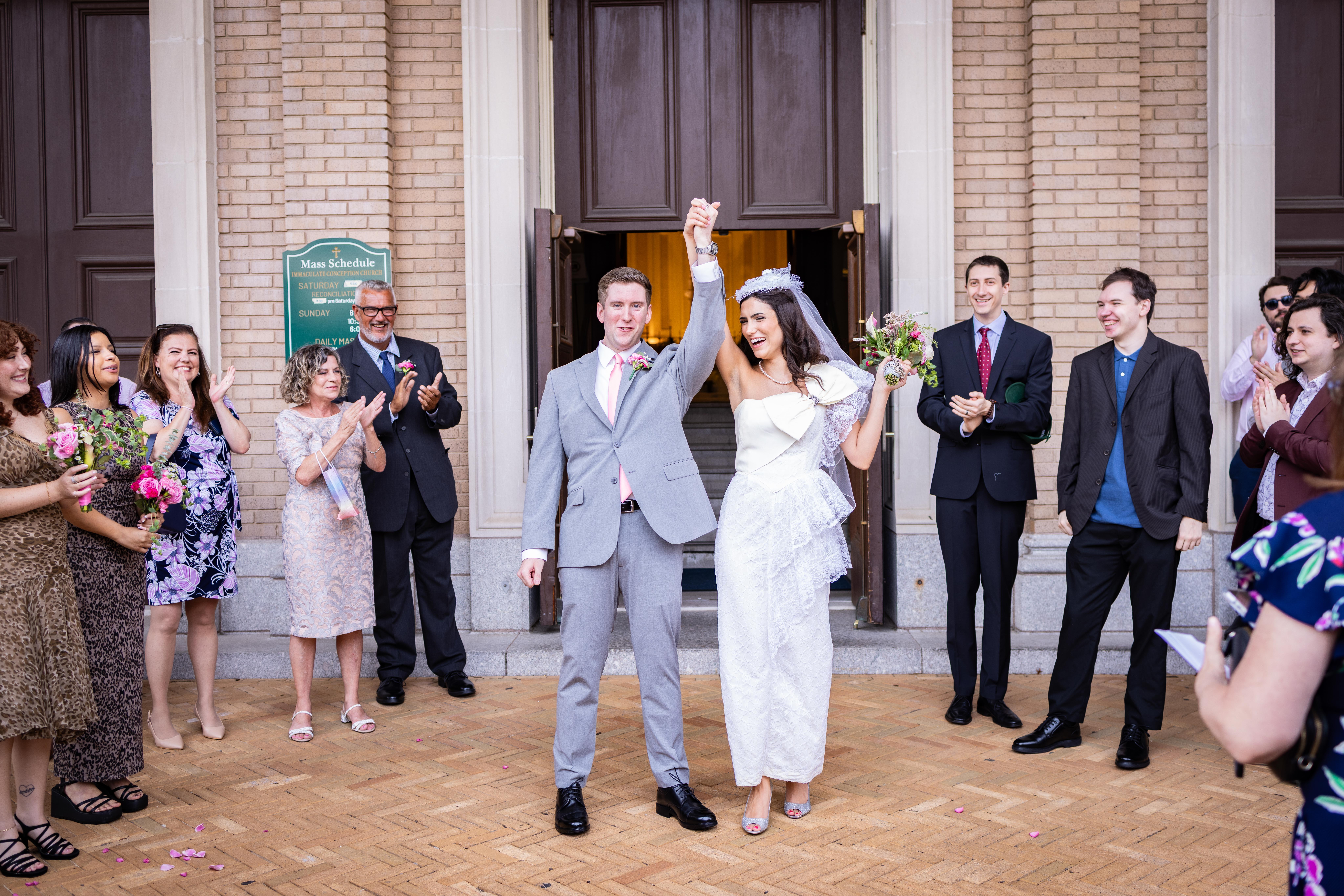
Grand entrance songs
Once introductions start, the energy should rise fast. Wedding party entrances can be fun and playful, but they still need to fit the room. A song that sounds hilarious in your car can feel cringey in a ballroom if it drags on too long.
For most couples, short, high-impact entrance cuts work best. You want momentum, not a three-minute performance for each pair. Then your own entrance should feel like a level up. This is where a strong DJ earns their keep – clean intros, confident MC timing, and the right amount of hype without turning it into a nightclub unless that is your vision.
First dance and parent dances

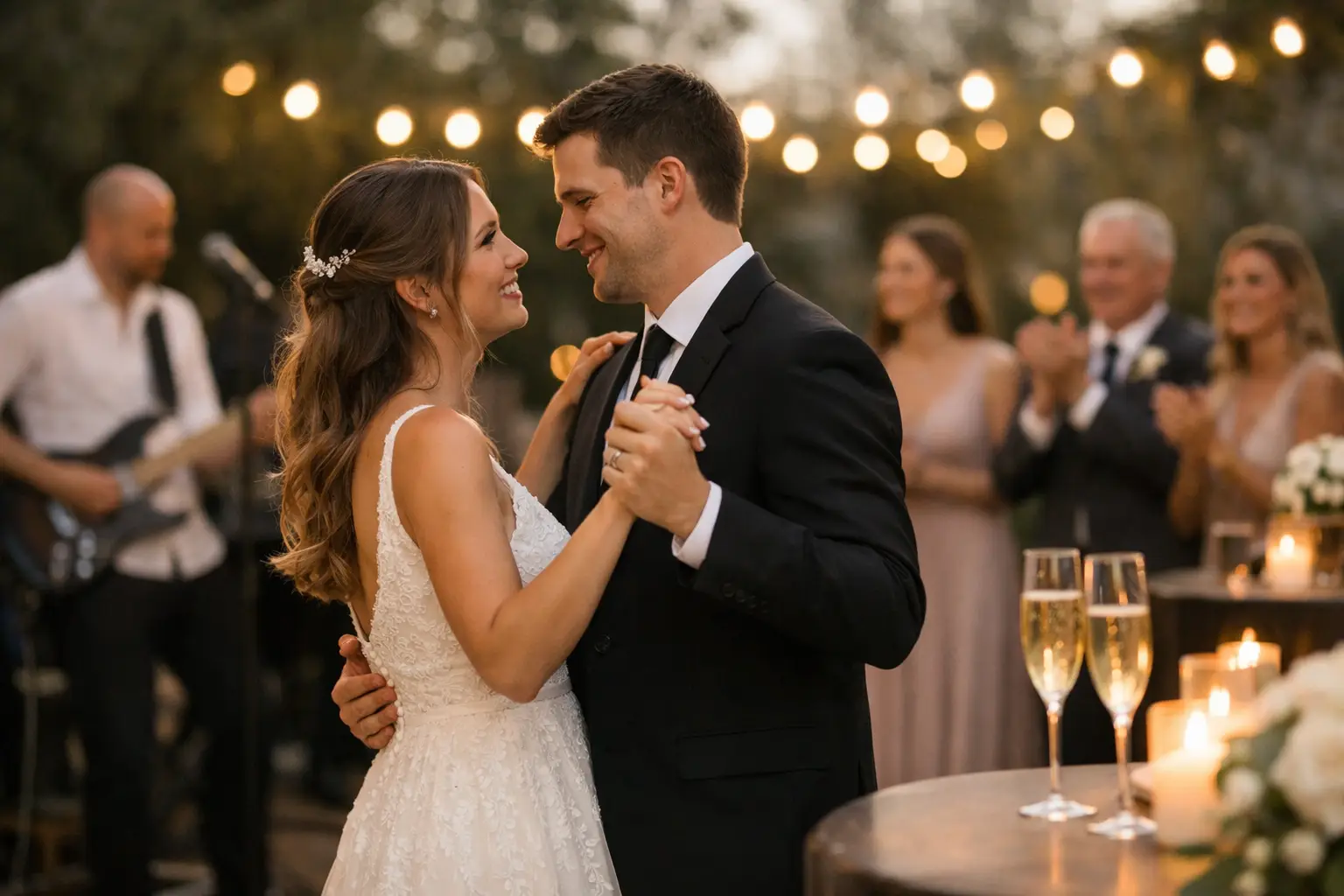
These songs usually come early, and for good reason. Once dinner service gets moving and guests start mingling, it becomes harder to get everyone’s attention for emotional spotlight moments.
That said, the order can vary. Some couples like to go straight from grand entrance into first dance for maximum focus. Others prefer to sit briefly, welcome guests, and then move into formal dances. Either can work. The best choice depends on your timeline, your photographer and videographer coverage, and whether you want the emotional tone to hit early or be spaced out.
Song length matters here too. A meaningful song is great. A five-minute song can feel endless under a spotlight. If you love a longer track, ask for a shortened edit. Nobody in the room is thinking, I hope this dance lasts another two minutes.
Dinner music
Dinner is where the reception breathes. Music should support conversation, not compete with it. The best dinner sets still have personality, but the volume and pacing stay controlled.
This is a great place to bring in your taste in a more relaxed way. Maybe that means classic Sinatra, 90s R&B, Latin ballads, Motown, country love songs, or modern acoustic tracks. The point is not to play background filler. It is to keep the room feeling alive while guests eat and connect.
If you are planning speeches during dinner, the music should leave space for those transitions. Nothing kills a heartfelt toast faster than a clumsy audio shift. Clean fades, proper microphone levels, and a DJ who knows when not to force energy are part of making the whole night feel polished.
Cake cutting, special moments, and transition songs
Not every wedding includes a cake cutting or bouquet toss, and that is completely fine. Formalities should fit your event, not a checklist from 2009. But if you are doing any feature moments after dinner, this is usually the point where they happen.
The music here should help bridge dinner into dancing. That means moving from mellow and social into more recognizable, upbeat tracks. This transition is often overlooked. Couples focus on the first dance and the dance floor, but the handoff between those phases is where the room either wakes up or stays seated.
A few well-chosen singalong favorites can do a lot of work here. Not full send yet. Just enough to shift the room from listening mode into party mode.
How to build the dance floor in stages
Open dancing works best when it ramps up. If your wedding reception song order jumps straight from salads to peak club bangers, you risk burning the room too fast. Guests need a runway.
Start broad, then get specific
The first 15 to 20 minutes of dancing should invite the widest range of guests possible. This usually means familiar, upbeat songs across generations. Think wedding classics, feel-good pop, throwbacks, disco, Motown, or crossover Latin hits depending on your crowd.
This is when older relatives, younger cousins, and your bridal party can all share the floor. If that opening stretch lands, the room starts to trust the DJ. Once that trust is there, it becomes much easier to move into more specific genres and bigger energy swings.
Save your niche favorites for the right pocket
Every couple has songs that mean a lot to them but may not hit with every guest. Those songs still belong in the night. They just need the right placement.
Maybe your friends will go wild for pop-punk, Afrobeat, reggaeton, house, or 2000s hip-hop. Great. The key is dropping those styles when your core dancers are already in motion, not using them as your first attempt to fill the floor.
That is one of the biggest trade-offs in reception planning. Personal music choices matter, but crowd flow matters too. The best receptions make room for both.
Think in waves, not one long sprint
A packed dance floor does not mean every song has to hit maximum intensity. Strong DJs read the room and create waves. Big singalong. Slight pullback. Rebuild. Big dance moment. Quick reset. Then another run.
That pacing keeps the floor from getting tired. It also creates room for requests, cultural sets, and surprise moments without making the night feel messy.
If you are planning a bilingual or multicultural reception, this matters even more. The order should give each side of the guest list moments that feel like theirs, while keeping the event unified. Done well, that mix feels electric. Forced poorly, it can feel like the room is splitting in half.
Common wedding reception song order mistakes
The biggest mistake is treating every formal song as equally important. They are not. Your first dance deserves attention. A cake cutting song may not need a major spotlight. Prioritize the moments your guests will actually feel.
Another common issue is overloading the early reception with slow songs. Romance matters, but too much slow pacing in a row can drain momentum before dancing even starts.
Then there is the opposite problem – couples who want nonstop energy from the second they enter. That can work for a very specific crowd, but most weddings need contrast. High energy works better when the night has somewhere to build from.
Finally, do not ignore logistics. Your song order should match catering timing, photo coverage, and any venue restrictions. Great entertainment is not just about song choice. It is about execution.
The best song order is customized, not copied
Pinterest timelines and Spotify playlists can help with ideas, but they cannot read your room. Your guest mix, your family dynamics, your culture, and your priorities all shape what order makes sense.
A formal black-tie wedding may need a smoother, more gradual lift. A lively multicultural crowd may be ready for a faster jump into dancing. A Sunday afternoon reception might call for a different pace than a Saturday ballroom party. It depends, and that is exactly why customization matters.
At Electrified DJ Services, this is where planning makes the difference. The goal is not to force your wedding into a formula. It is to create a reception flow that feels like you and keeps the room with you from the first entrance to the last song.
If you are building your timeline now, do not start by asking what songs you need. Start by asking how you want each part of the night to feel. That is usually where the right order begins.