Your guests may not remember every centerpiece or signature drink, but they will remember how your wedding felt. That feeling starts with custom wedding music planning – not just picking songs you like, but building the soundtrack for a day that needs to move, breathe, and hit the right emotional note at the right time.
That is where many couples get stuck. They know they want a packed dance floor, a meaningful ceremony, and smooth transitions, but they are staring at endless playlists with no clear plan. Great wedding music is not random. It is curated around your relationship, your crowd, your timeline, and the kind of energy you want people talking about on the ride home.
Why custom wedding music planning matters
A wedding has different phases, and each one asks for something different from the music. The pre-ceremony needs warmth without distraction. The processional needs timing. Cocktail hour should feel social and polished. Dinner should support conversation. Then the dance floor needs a smart ramp-up, not a cold start.
If all of that gets treated like one big playlist, the event can feel disconnected. You might have songs you love, but the flow can still fall flat. Custom planning fixes that by matching the right music to the right moment instead of hoping one style works for every part of the night.
It also helps avoid the classic mismatch between couple and crowd. Maybe you love indie folk, but your families want Motown, salsa, Top 40, and a few wedding singalongs. That does not mean your taste gets pushed aside. It means the plan needs range. The strongest wedding soundtrack reflects the couple while still reading the room and keeping guests engaged.
What custom wedding music planning really includes
This goes far beyond a must-play list. A real plan starts with the key formalities – ceremony songs, grand entrance music, first dance, parent dances, cake cutting, and last song. Those selections matter because they anchor the day’s emotional highlights.
Then comes the larger picture. What should guests hear as they arrive? Do you want cocktail hour to feel romantic, modern, upbeat, or culturally specific? Should dinner lean elegant and understated, or should it already start building momentum? These choices shape the experience even when people are not fully aware of it.
The dance floor strategy matters just as much. A strong DJ does not simply line up bangers and press play. They plan around age ranges, family dynamics, cultural traditions, and the pacing of the reception. A room full of college friends responds differently than a wedding with three generations, bilingual guests, and a big mix of music backgrounds.
That is also where do-not-play selections come in. They are just as useful as favorites. If there are songs you are tired of, genres you never want to hear, or lyrics that do not fit your event, saying that upfront protects the vibe. Custom planning is not only about what gets added. It is also about what gets filtered out.
Start with the mood, not just the songs
One of the easiest ways to make music planning less stressful is to stop thinking song-first. Start by describing the feeling you want in each part of the day.
For example, your ceremony might be intimate and timeless. Cocktail hour could be stylish and upbeat. Dinner might feel warm and celebratory. The dance floor might need to start broad, then turn high-energy later in the night. Once those moods are clear, song choices become easier because every selection has a job.
This approach is especially helpful for couples with wide-ranging tastes. You may both love completely different genres, and that is fine. The question is not which genre wins. The question is where each style fits best. A jazz-forward cocktail hour and a high-energy open dance set can both belong in the same wedding if they are placed with intention.
How to balance your taste with guest energy
This is where experience matters. A wedding is personal, but it is also a live event. The music should reflect you without ignoring the reality of the room.
Sometimes couples worry that accommodating guests will make the night feel generic. It does not have to. The key is choosing the right moments for personal favorites and the right moments for broad crowd appeal. Your processional, first dance, and private last dance can be deeply personal. Your dance floor can still include the songs that get your family and friends out of their seats.
There is always some trade-off. If your playlist is too niche, guests may disengage. If it is too crowd-driven with no personality, the wedding can feel interchangeable. The sweet spot is a plan that feels like you while still giving the room what it needs.
A skilled DJ also adjusts in real time. Even the best plan should have flexibility. If Latin music is landing hard, it may make sense to stay there longer. If an older crowd is filling the floor early, the set should respond. Planning gives the night structure. Reading the room gives it life.
Custom wedding music planning for multicultural weddings
For many couples, personalization is also cultural. That may mean blending English and Spanish music, including traditional family songs, or creating space for special moments like Hora Loca. It may also mean balancing different generations with different expectations of what celebration sounds like.
This is not something to treat as an afterthought. Cultural music choices affect participation, comfort, and the overall sense of connection in the room. When done well, they make guests feel seen. When handled poorly, they can create awkward gaps or missed opportunities.
That is why communication matters early. If your wedding includes bilingual announcements, Latin dance sets, regional traditions, or specific family expectations, your entertainment team should know that from the start. The plan should reflect your full guest experience, not just a standard wedding template.
Timing can make or break the soundtrack
Even perfect songs can miss if the timing is off. A ceremony cue that starts too late changes the whole entrance. An awkwardly cut first dance can ruin a meaningful moment. A dance floor that starts right after a long dinner lull needs a different energy than one that opens after a lively set of toasts and formalities.
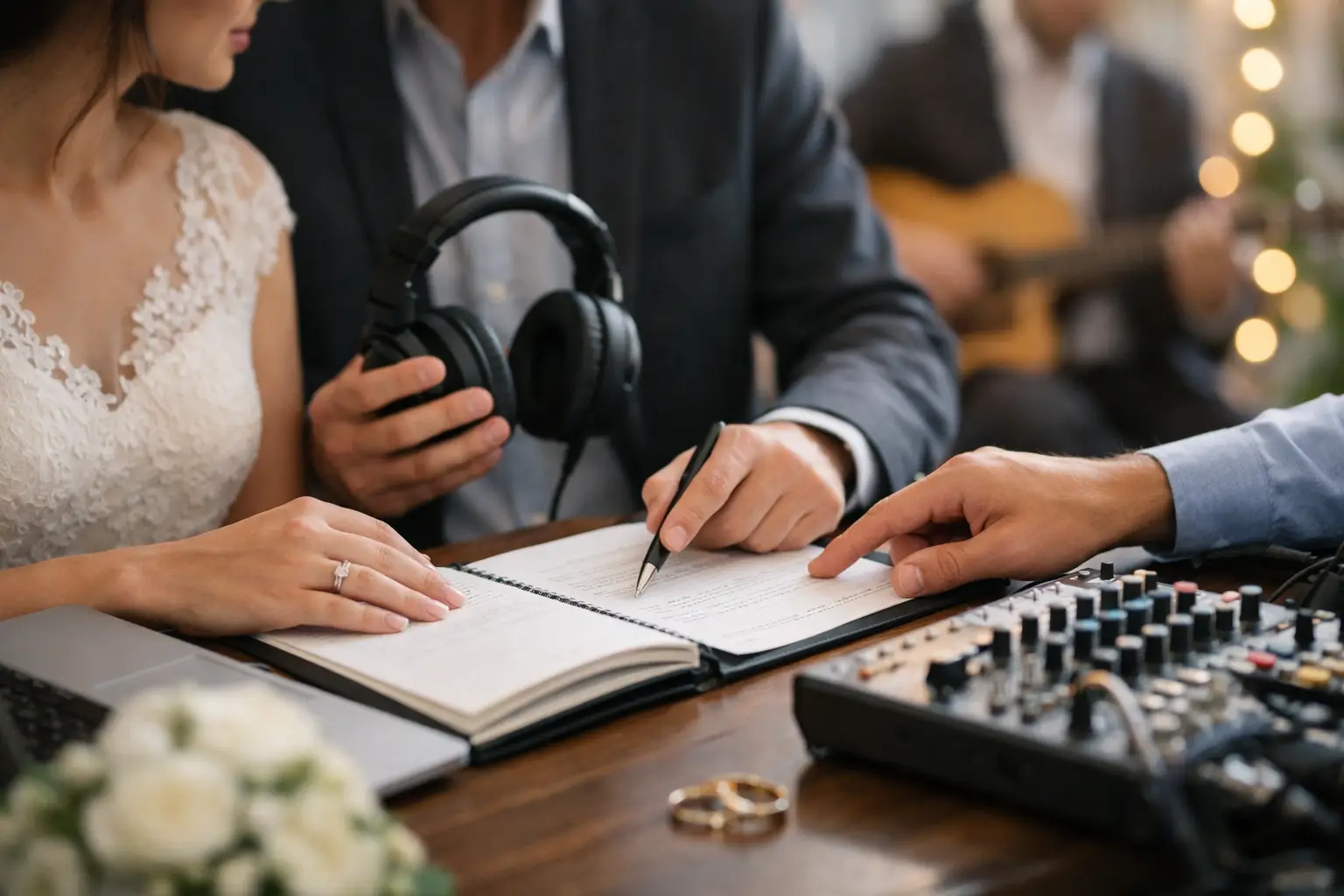
That is why music planning should connect directly to your timeline. The entertainment should not sit in a separate box from the rest of the wedding. It works best when the DJ, MC, and planner or venue team are aligned on pacing.
This becomes even more valuable if one company is handling multiple event elements. When entertainment, lighting, photo booth timing, and media coverage are coordinated under one roof, the night usually feels tighter and less stressful. There are fewer handoff problems and fewer moments where something important gets lost between vendors.
Questions couples should ask before finalizing the music plan
You do not need to know every song before meeting with your DJ. You do need clarity on a few things. What moments matter most to you emotionally? What kind of crowd are you inviting? What music should absolutely be included, and what should never be played? Are there cultural or bilingual elements that need to be built into the flow? Do you want the night to feel elegant, explosive, laid-back, club-style, or somewhere in between?
Those answers create a much stronger foundation than sending over a 300-song playlist with no context. A playlist tells someone what you like. A planning conversation explains how you want the event to feel.
If you are getting married in a market like Northern New Jersey, where weddings often bring together diverse families, mixed music tastes, and high expectations for energy, that conversation matters even more. The crowd is rarely one-note. Your music plan should not be either.
The best wedding music feels effortless because it was planned well
When a wedding soundtrack is done right, guests do not stop to analyze it. They just feel the difference. The transitions make sense. The formal moments land. The dance floor builds naturally. The room feels connected instead of choppy.
That kind of night does not happen by accident. It comes from custom wedding music planning that treats your wedding like a real event, not a generic playlist with fancy lighting. At Electrified DJ Services, that is exactly how we approach it – with energy, attention to detail, and a plan built around your people, your style, and the moments you want to remember long after the last song ends.
If you are starting your planning now, do yourself one favor: think beyond the songs. Focus on the experience you want to create, and let the music do what it does best: bring the whole room into it.