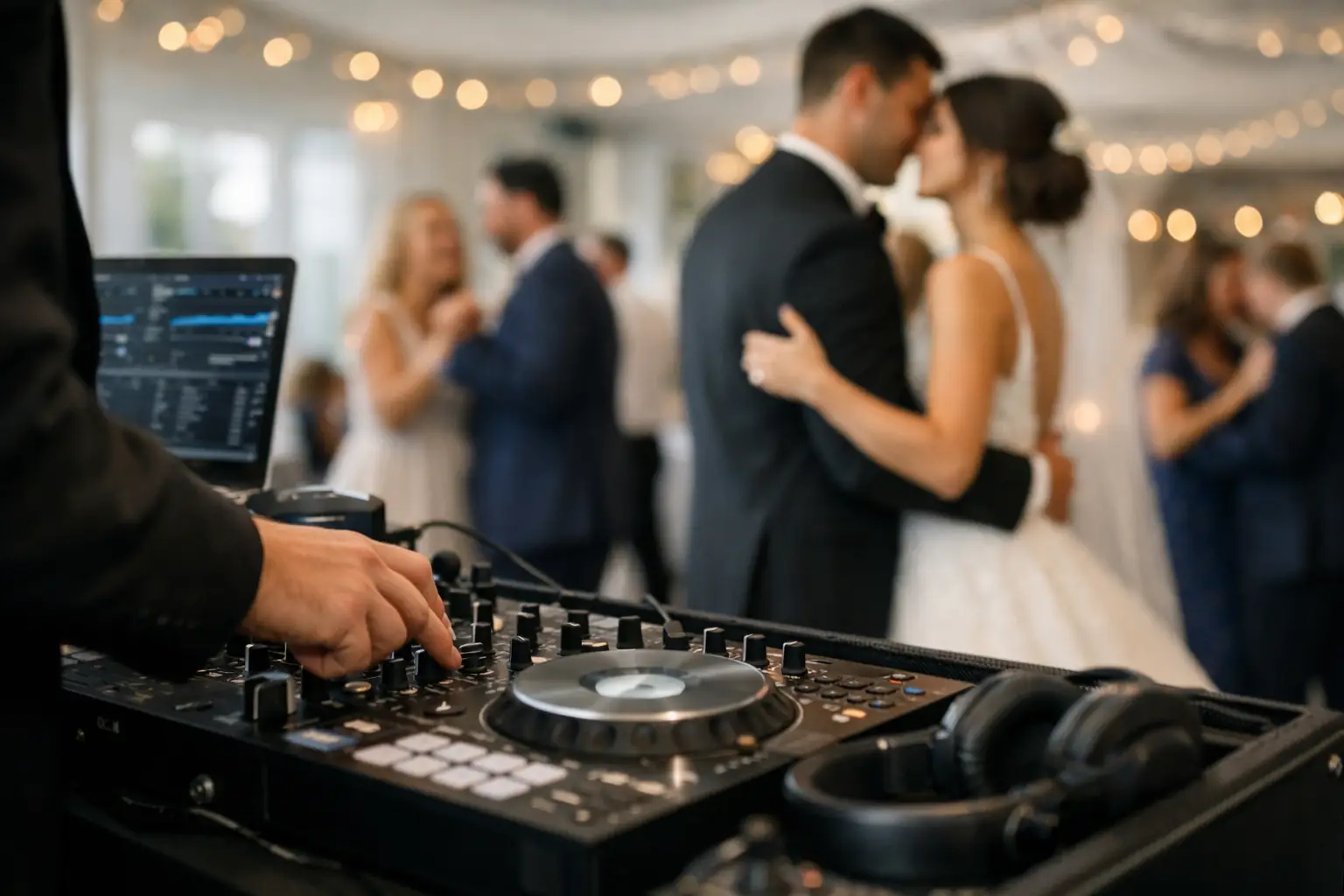
The fastest way to spot a weak reception plan is a playlist that looks great on paper and falls flat once dinner ends. A strong wedding dj playlist example is not just a list of songs you like. It is a timeline, a mood shift, and a strategy for keeping every part of the night moving without forcing the energy.
That matters because weddings are not regular parties. You are mixing generations, cultures, friend groups, and different expectations in one room. The right music can make that feel effortless. The wrong sequence can empty the dance floor, drag out transitions, or make the night feel disconnected from the couple it is supposed to celebrate.
What a good wedding DJ playlist example actually does
A good reception playlist supports the event, not the other way around. It gives each part of the night its own feel while still sounding cohesive. Guests should never feel like the room is starting over every 20 minutes.
This is where couples often get stuck. They focus on favorite songs, which makes sense, but a wedding DJ is also thinking about timing, pacing, and how people respond in real time. A song that is perfect for a drive with the windows down might not work right after a heartfelt toast. A club hit that always gets your college friends moving might clear out older guests if it lands too early.
The best playlists leave room for personality and flexibility. You want enough structure to cover your major moments, but not so much rigidity that your DJ cannot read the room.
Wedding DJ playlist example by reception moment
Below is a practical wedding dj playlist example built around the flow of a typical reception. It is not meant to be copied song for song. It is meant to show how the night can build naturally.
Guest arrival and pre-reception
As guests enter, the music should feel warm, polished, and upbeat without demanding attention. This is not the time for high-energy dance records. You want people settling in, greeting each other, finding seats, and getting excited for what is coming.
Songs in this section might include:
- Lovely Day – Bill Withers
- Signed, Sealed, Delivered – Stevie Wonder
- Put Your Records On – Corinne Bailey Rae
- Better Together – Jack Johnson
- I Choose You – Sara Bareilles
- L-O-V-E – Nat King Cole
This part works best when the music feels familiar and easy. Think feel-good, not full-throttle.
Grand entrance
Now the room needs a lift. The grand entrance should sound intentional and confident. It can be fun, classy, hype, or somewhere in between, but it should match the couple.
A few common styles work well here. Some couples want an anthemic entrance with songs like Can’t Stop the Feeling or 24K Magic. Others prefer a cleaner, more modern intro with a strong beat and less novelty. The key is choosing something that creates momentum without feeling dated or forced.
First dance and formal dances
This section is about emotional impact, not crowd response. The first dance, parent dances, and any anniversary or family spotlight songs should feel personal. That does not always mean slow. It means meaningful.
Some couples want a timeless ballad. Others want an acoustic cover, a country track, or a song that reflects their culture or shared history. If you are planning a shortened first dance that opens into a dance set, that is often a smart move for couples who want the romance without spending four full minutes in the spotlight.
Dinner music
Dinner is where pacing matters most. The room should feel alive, but conversation still needs to work. This is not background silence, and it is not dance-floor music either.
Great dinner music usually sits in the mid-tempo lane. Think Motown, soft pop, R&B classics, light Latin crossover, and recognizable hits played at the right volume. Songs like Just the Two of Us, Ain’t No Mountain High Enough, Stand by Me, and smooth modern favorites can carry this stretch well.
If your guest list is multicultural or bilingual, dinner is also a smart place to introduce variety early. A little salsa, bachata, or romantic Spanish-language music can signal that the night belongs to everyone in the room.
Open dancing – set one
The first dance set should be welcoming. If you start too aggressively, people hesitate. If you start too safe, energy never takes off. The sweet spot is a run of songs with broad appeal that different age groups know right away.
This might look like September, Yeah!, I Wanna Dance with Somebody, Shut Up and Dance, and Dancing Queen. The point is not the exact titles. The point is accessibility. You want songs that make guests feel like getting up is easy.
A strong DJ will usually mix in quick wins here, then watch who responds. Are your guests leaning toward throwbacks, singalongs, Latin, hip-hop, Top 40, or classic wedding records? That tells you what to build next.
Why the middle of the night makes or breaks the reception
A lot of playlists start strong and then lose shape. The middle of the reception is where energy can dip if song choices get too niche, too repetitive, or too disconnected from the room.
This is where experience shows. A packed dance floor is rarely built by playing one genre all night. It usually comes from controlled shifts. A short run of 90s hip-hop can hit hard, then give way to pop singalongs, then move into Latin favorites, then circle back to high-recognition dance tracks. The transitions matter as much as the songs.
If your families love different styles, that is not a problem. It is actually an advantage when it is handled well. A wedding should not sound one-note. It should feel inclusive. For some couples, that means balancing freestyle, reggaeton, and old-school dance. For others, it means blending country, rock, and mainstream pop. The exact formula depends on who is in the room.
Open dancing – peak set
Once the floor is active, the music can get bolder. This is the time for bigger reactions, faster tempo, and songs that create group moments.
A peak set might include tracks like:
- Mr. Brightside – The Killers
- Don’t Stop Believin’ – Journey
- Party Up – DMX
- Gasolina – Daddy Yankee
- Danza Kuduro – Don Omar and Lucenzo
- Everybody – Backstreet Boys
- Cupid Shuffle or Cha Cha Slide if your crowd responds to line dances
Not every wedding needs all of that. Some couples love line dances because they get reluctant guests involved. Others feel they interrupt the flow. That is a perfect example of where it depends on the crowd.
Specialty moments and cultural sets
This is also the point where custom elements can become the most memorable part of the night. A Hora Loca burst, a high-energy Latin block, a set built around family favorites, or a quick switch into club-style mixing can completely change the room.
These moments work best when they are planned, but not over-scripted. You want structure without killing spontaneity. If your guest list includes Spanish-speaking family members, out-of-town guests, and multiple generations, it helps to work with a DJ and MC team that can speak to all of them naturally and keep the transitions smooth.
Common playlist mistakes couples make
The biggest mistake is overbuilding the playlist and underplanning the flow. A list of 150 songs can still produce a messy reception if there is no logic to when each one lands.
Another issue is ignoring do-not-play songs until the last minute. Those matter. If there are songs that annoy you, remind you of an ex, or tend to trigger awkward guest reactions, your DJ should know that early.
Couples also sometimes assume every favorite deserves a spot. It usually does not. A wedding reception is a live event, not a personal music archive. The best results come from identifying must-play songs, preferred genres, and the overall feeling you want, then letting your DJ shape the rest around the room.
How to personalize your wedding DJ playlist example
Start with your non-negotiables. Pick the songs tied to your entrance, first dance, and any family traditions. Then think bigger than titles. What do you want guests saying at the end of the night? That it was elegant? Wild? Diverse? Nonstop? Family-centered? That answer is often more useful than another list of songs.
Next, think about your actual guest mix. If half your crowd loves current hits and the other half wants classics, your playlist should reflect that. If your wedding includes bilingual guests or specific cultural traditions, build those in on purpose rather than treating them like side notes.
Finally, trust live adjustment. Even the best wedding dj playlist example is still just a framework. Real success comes from reading the room, changing direction when needed, and knowing when to stretch a moment or move on. That is the difference between hearing music and feeling a reception come alive.
At Electrified DJ Services, we see it every weekend – the couples who plan the feeling of the night, not just the song list, almost always get the celebration they imagined. Start with your moments, build for your guests, and leave space for the dance floor to tell you what it needs.