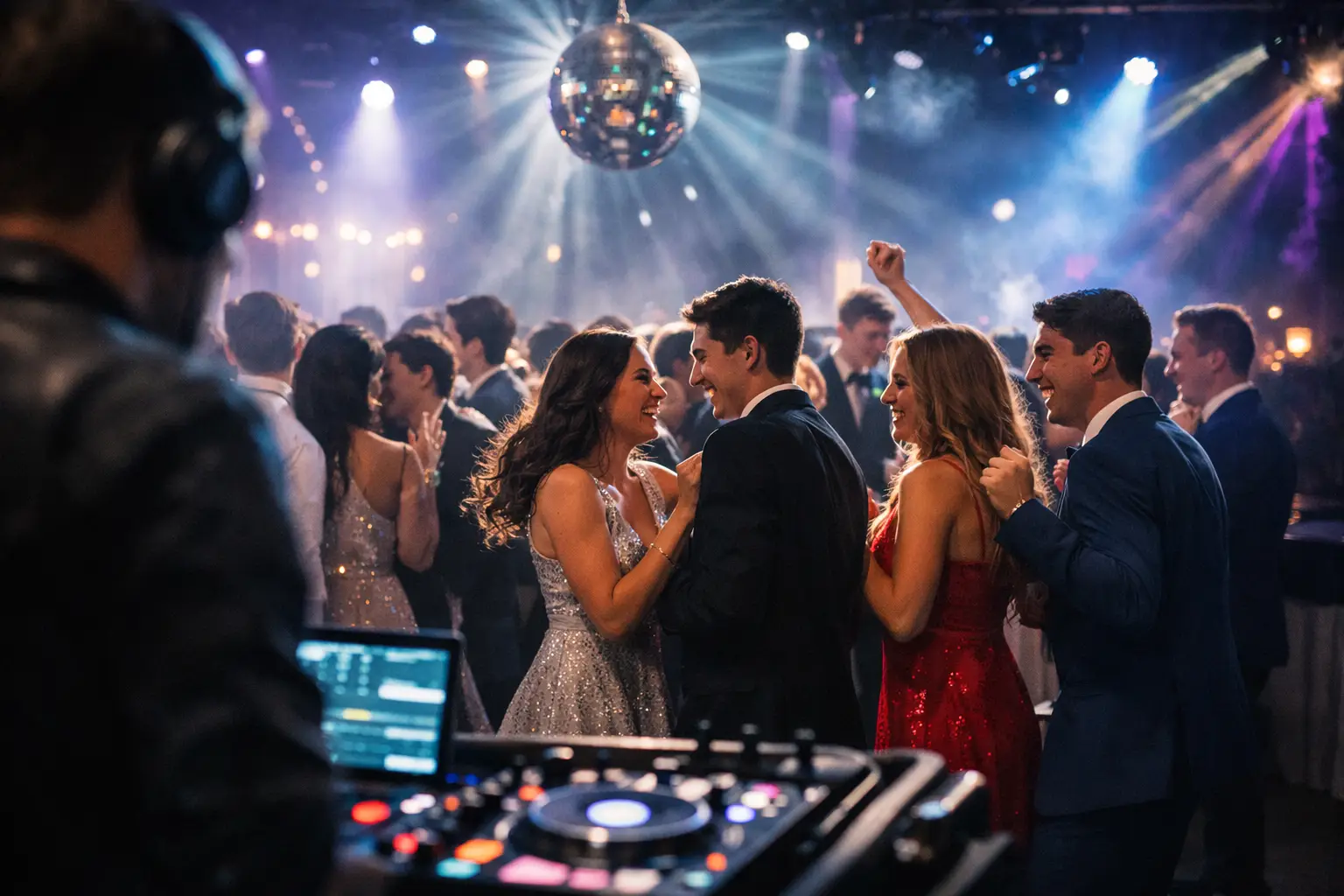
Prom guests will remember the moment the doors open, the bass drops, and the room suddenly feels bigger than their school gym. They will also remember the opposite: awkward silence, a half-empty dance floor, and a playlist that never finds its momentum. Knowing how to plan prom entertainment means designing the energy of the entire night, not simply booking someone to play music.
For prom committees, class advisors, and parent organizers, the goal is clear: create a polished, safe, high-energy celebration where students feel included, photographed, and excited to stay until the final song. The best entertainment plan combines strong music, confident MC direction, lighting that transforms the venue, and interactive moments that give every student a reason to participate.
Start With the Prom Experience You Want to Create
Before comparing DJs, photo booths, or lighting packages, decide what students should feel when they walk in. A black-tie ballroom prom calls for a different approach than a neon-themed event in a school venue. Your entertainment should support the theme, but it should never become so themed that it limits the fun.
Talk through the big moments first: arrival, grand entrance, dinner or refreshments, formal announcements, dancing, crowning, and the final send-off. This gives your entertainment team a roadmap for building energy at the right pace. A great prom does not start at full volume and hope for the best. It builds anticipation, creates peaks, and leaves students with one more unforgettable moment before the lights come up.
Student input matters here. Ask a small, representative group for theme ideas, must-play artists, cultural music requests, and activities they would actually use. A planning committee can help, but it should not be the only voice in the room. The students attending prom are the real audience.
How to Plan Prom Entertainment Around the Timeline
The timeline is what turns separate services into a real event. Your DJ, MC, photographer, photo booth attendant, venue coordinator, and school staff should all know where they need to be and when. When no one owns the flow of the night, small delays can drain the energy before dancing even begins.
Build the schedule around transitions, not just start and end times. For example, students may need 30 to 45 minutes to arrive, take photos, find friends, and settle in before you expect the dance floor to fill. This is a great window for upbeat background music, photo opportunities, and a roaming social atmosphere.
Once the main program begins, keep announcements short and intentional. Long pauses for speeches, awards, or crowning logistics can lose a room quickly. Your MC should be clear, upbeat, and school-appropriate, with enough personality to keep attention without making the night about them.
A simple production run sheet should cover these key points:
- Vendor load-in, sound check, and lighting setup times
- Doors open, arrivals, and photo booth start time
- Announcements, dinner or refreshments, and special presentations
- Prom court recognition or crowning details
- Peak dance sets, last call, and event exit timing
Leave room for real life, too. If buses run late or crowning takes longer than expected, your entertainment team should be able to adjust without making the room feel stalled.
Choose a DJ Who Can Read a Student Crowd
A prom DJ needs more than a big playlist. They need the awareness to see what is happening on the dance floor and make smart adjustments in real time. A song that works for one class may clear the floor for another. The best DJs know how to move between current hits, throwbacks, singalongs, dance tracks, Latin favorites, hip-hop, pop, and clean edits without making the night feel random.
Ask potential DJs how they handle requests, explicit music, school policies, and music approval. This conversation should happen before the contract is signed. Some schools require fully clean music. Others allow edited versions with specific guidelines. Either way, your DJ should have a clear process for keeping the music fun without putting staff or students in an uncomfortable position.
Also ask who will be on the microphone. A strong MC can drive a grand entrance, direct students toward key moments, and maintain momentum between songs. Too much talking can feel forced, but no direction at all can leave a crowd unsure of what is happening next. The balance matters.
For diverse student communities, music planning should be inclusive by design. Bilingual announcements, Spanish-language favorites, and a well-timed Hora Loca-style party moment can bring a different level of excitement when they fit the student body and school guidelines. The point is not to check a box. It is to make more students feel like the night was planned with them in mind.
Make the Room Look Like a Prom, Not a Cafeteria
Lighting changes everything. Even a beautiful venue benefits from intentional color, movement, and visual depth. In a school gym, cafeteria, or banquet hall, immersive lighting can turn a familiar room into a place students are excited to post about.
Uplighting can match school colors or the prom palette. Dance floor lighting creates movement when the music builds. A monogram or custom gobo can add a polished focal point near the entrance, stage, or photo area. These details work especially well in photos and videos, but they also make the room feel more intentional the second guests arrive.
There is a trade-off: more effects are not always better. Avoid placing bright, moving lights directly in dining areas or using haze effects without venue approval. Ask about ceiling height, power access, fire rules, and any restrictions on fog, confetti, or special effects. A professional entertainment company will address these details early, not during setup.
Give Students More Than One Way to Participate
Not every student wants to dance for three straight hours. That does not mean they are not having fun. The most successful proms create a few different zones of engagement so students can move between the dance floor, photo area, lounge seating, and social moments without feeling disconnected from the event.
A digital or 360-degree photo booth can give groups something memorable to do during arrivals and dance breaks. It also creates content students are excited to share. If privacy and school policy allow it, live social media displays or instant sharing can add energy, but make sure the setup has clear moderation and permissions.
Photography and videography deserve the same planning attention as entertainment. Prom is a milestone, and students will want polished group photos as much as candid dance-floor moments. Set up a well-lit backdrop or designated portrait area near the entrance, then let photographers capture the spontaneous moments once the party is moving.
Think carefully before adding games or contests. They can work when they are fast, voluntary, and aligned with the crowd. Forced participation, long competitions, or activities that pull everyone off the floor can have the opposite effect. If students are already dancing, let them dance.
Plan for Safety, Supervision, and Professional Execution
A high-energy prom still needs guardrails. Confirm venue rules, school supervision expectations, security procedures, dress code messaging, and the process for handling inappropriate song requests. Your vendors should understand that prom has a different level of responsibility than a private adult party.
Reliable equipment is part of that responsibility. Ask about backup music access, spare microphones, insurance, arrival time, and whether the team provides all necessary sound and lighting equipment. Saving money with an inexperienced vendor can cost more when a speaker fails, a microphone cuts out during crowning, or the person behind the booth cannot manage a room full of students.
For schools in Bergen, Hudson, and Essex counties, working with a local team can be especially helpful. Familiarity with regional venues, traffic patterns, loading requirements, and school event expectations makes setup easier and helps reduce day-of stress. Electrified DJ Services brings DJs, MCs, lighting, photo booths, and event media together under one coordinated team, so organizers are not chasing multiple vendors while prom is in progress.
Confirm the Details Before Event Week
A final planning call should happen about one to two weeks before prom. Review the timeline minute by minute, the approved music direction, names and pronunciations for announcements, photo booth placement, power needs, arrival procedures, and the point person for decisions that night.
Share one final contact list with your entertainment team and school staff. If the advisor is busy helping students, the DJ should know who can approve a timeline change. If a venue manager needs the lights adjusted, the lighting technician should know who to speak with. Clear communication keeps small issues from becoming visible problems.
The best prom entertainment feels effortless to students because the work happened well before they walked through the door. Give your team a clear vision, trust experienced professionals to run the room, and leave enough space for the crowd to create the moments that will matter most.