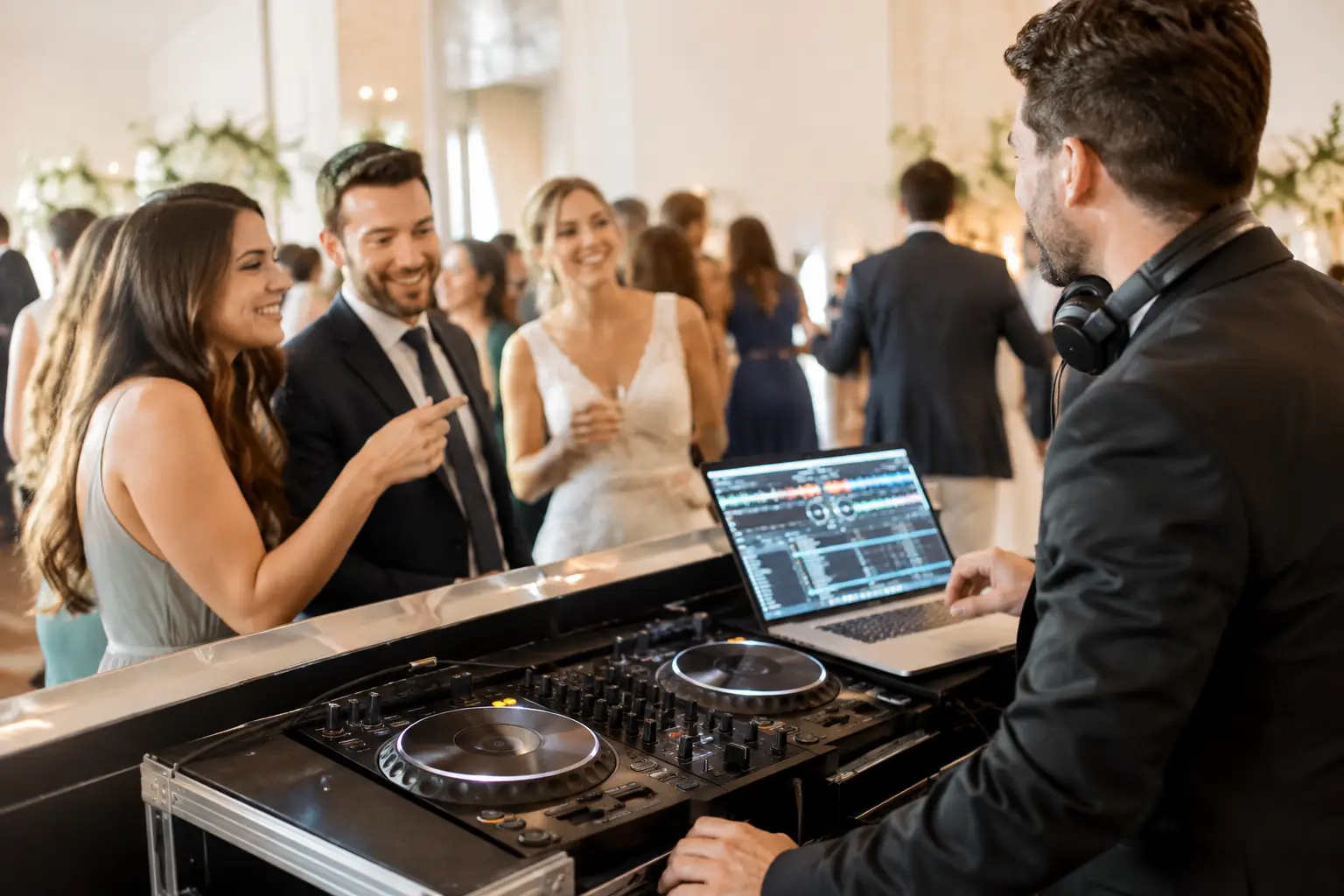
A guest approaches the DJ booth with the song that defined their college years. Your aunt has a must-play classic. Your best friend wants a late-night singalong. So, do DJs take song requests? Most professional wedding and event DJs do, but the best ones do not simply play every request the moment it is handed over. They use requests as useful crowd feedback while protecting the energy, timing, and personality of your celebration.
Most professional wedding and event DJs, including Electrified DJ Services, do take song requests from guests. However, they do not simply play every request immediately; instead, they use requests as valuable crowd feedback to inform their performance. This approach allows the DJ to protect the overall energy, timing, and personality of the celebration, ensuring a cohesive experience rather than a random queue of songs. A skilled DJ integrates suitable requests to enhance the dance floor's rhythm and make the room feel inclusive for all guests.
For a wedding, milestone party, or school event, that distinction matters. A packed dance floor is not created by a random queue of songs. It is created by a DJ who knows when a request will bring people together, when it will clear the room, and how to fit it naturally into the moment.
Do DJs Take Song Requests? Usually, With a Plan
A professional DJ should welcome reasonable guest requests. They can reveal what different generations are excited to hear, help a shy guest feel included, and create one of those unexpected moments where the whole room sings every word. At a family celebration, a request may also reflect a cultural tradition or a song that means something personal to the hosts.
But accepting requests is different from promising that every request will be played. Your DJ is managing more than music. They are reading the room, watching the dance floor, coordinating with the MC, staying aware of the event timeline, and building transitions that keep momentum moving forward.
If the room is fully engaged with a high-energy set, dropping an unrelated slow song because one person asks for it can interrupt the experience for everyone else. A skilled DJ may save that song for dinner, cocktail hour, a slower portion of the night, or a better-fitting musical set. Sometimes the right answer is a respectful no, especially if the request conflicts with your preferences or the event atmosphere.
The Difference Between a Playlist and a Performance
A playlist plays songs. A professional DJ performs for the room.
That does not mean guests should be ignored. It means their requests are considered in context. A DJ might hear a request for a throwback hip-hop track, then choose the right edit and place it between songs with a compatible tempo and feel. The guest gets their moment, while the dance floor keeps its rhythm.
This is especially valuable at weddings, where the crowd can include grandparents, college friends, coworkers, children, and relatives with different musical tastes. The goal is not to satisfy every individual request on command. The goal is to make the room feel like it belongs to everyone.
How Great DJs Handle Requests Without Losing the Dance Floor
The best request policy is flexible, not careless. Your DJ should have the confidence to take direction from you while using live experience to make smart decisions throughout the event.
First, they should know your priorities. If you tell them that Latin music, 2000s throwbacks, Motown, or high-energy dance music matters most, those preferences become the foundation. Guest requests can then support the direction instead of pulling the night in five different directions.
Second, they should assess whether a request suits the current moment. A popular song is not always the right song. The same track may work perfectly during an open dance set but feel out of place immediately after a romantic parent dance or during a formal reception entrance. Timing is part of the service.
Third, they should keep the event moving. At weddings, the DJ and MC often manage announcements, formalities, specialty dances, cake cutting, and the transition from dinner into dancing. At private events, there may be surprise presentations, birthday moments, or cultural traditions. Requests need to fit around those moments rather than derail them.
Finally, a polished DJ should use professional judgment when a request is inappropriate, unavailable, or likely to empty the dance floor. Guests do not always realize that a song has explicit lyrics, an awkward message for the occasion, or a completely different energy from the set in progress. A courteous response keeps the guest comfortable and the event on track.
Set Your Request Rules Before the Event
The easiest way to avoid confusion is to discuss song requests during planning. A professional entertainment company should ask how much control you want over the music and make that preference clear before the celebration begins.
Some couples want an open-request atmosphere. They love the idea of guests shaping part of the dance floor experience, particularly when family and friends share a strong connection to certain genres or eras. This can work beautifully when the DJ has room to curate the requests and keep the music cohesive.
Other couples prefer requests only from the couple, the planner, or a designated VIP such as the maid of honor or parent. This is a smart choice when you have a highly specific music vision, a short reception timeline, or a long list of songs and styles you do not want played.
A middle ground is often the best fit: guests may request songs, but the DJ plays them only if they match the hosts’ approved music direction. That gives your guests a voice without handing over the event soundtrack.
Your Must-Play and Do-Not-Play Lists Matter
A must-play list gives your DJ the songs that truly matter to you. Think of it as a priority list, not a minute-by-minute script. It may include your favorite dance-floor artists, meaningful songs for family members, or music tied to your heritage and relationship.
A do-not-play list is just as useful. It prevents uncomfortable surprises, whether you want to avoid explicit music, certain genres, breakup songs, overplayed wedding tracks, or songs connected to a difficult memory. If a guest requests something from that list, your DJ can decline it discreetly without making it a big moment.
For bilingual and multicultural events, this planning conversation is even more valuable. A DJ who understands your preferred balance of English and Spanish music, as well as any special moments like Hora Loca, can welcome requests while keeping the cultural flow authentic and exciting.
When Should a DJ Say No to a Song Request?
A professional DJ may decline a request when it conflicts with your do-not-play list, contains unsuitable lyrics, repeats a song already played, or breaks the energy of the current set. They may also skip requests that do not suit the event, such as a highly explicit track at a school function or a novelty song during an elegant wedding reception.
The key is how it is handled. Guests should not feel dismissed. A seasoned DJ can say they will look for the right moment, offer a similar song, or simply move on politely while continuing to engage the room. Great hospitality happens at the booth as much as it happens on the dance floor.
At Electrified DJ Services, the focus is always on the celebration you want to create: music that reflects you, an MC who keeps the timeline smooth, and a dance floor with real momentum. Requests can add personality to that experience when they are guided by a DJ who knows your crowd.
When you meet with a prospective DJ, ask how they handle guest requests, not just whether they accept them. Their answer will tell you a lot about their planning process, crowd-reading ability, and commitment to making your event feel personal from the first song to the final dance.