The bride is in the chair for hair and makeup, the groom is opening a card, and the room is still calm before the day gets moving. Those quiet scenes often become some of the most meaningful parts of a wedding film. So, when should wedding video start? For most couples, coverage should begin before the ceremony, usually during the final stage of getting ready, not when the first guest takes a seat.
For most weddings, video coverage should begin before the ceremony, typically during the final stages of getting ready, rather than when the first guest arrives. This early start allows videographers to capture crucial detail shots, final preparations, candid interactions, and first-look moments without rushing. For a typical New Jersey wedding with an evening reception, Electrified DJ Services suggests video coverage often starts about two to three hours before the ceremony. Starting early ensures the film captures the anticipation, emotion, and energy leading up to the main event, creating a more complete and meaningful story than a highlight reel that begins at the altar.
The right answer depends on the story you want your film to tell, the distance between your locations, and how long your reception entertainment is scheduled to run. A wedding video should not feel like a highlight reel that suddenly begins at the altar. It should capture the anticipation, the emotion, the energy, and the celebration that follows.
When Should Wedding Video Start for Most Weddings?
For a typical New Jersey wedding with an evening reception, video coverage often starts about two to three hours before the ceremony. That timing gives the videography team a chance to capture detail shots, final preparations, candid interactions, and any first-look moments without rushing through the day.
If your ceremony begins at 5:00 p.m., a realistic video start time may fall between 2:00 and 3:00 p.m. That does not mean the cameras need to record every minute of hair and makeup. It means your team arrives while there are still meaningful moments to document and enough time to work calmly.
Starting too late can leave out the pieces couples often wish they had on film: a parent seeing the bride dressed for the first time, friends helping with cufflinks, a private note exchange, or the nervous laughs before the ceremony. Starting too early, on the other hand, can add hours that do not create much value if everyone is still in separate rooms with little happening.
The sweet spot is the point when the day begins to feel real.
How Should Wedding Video Coverage Be Built?
A great wedding timeline is not built by picking a random number of video hours. It is built around the moments you want preserved. Your videographer, DJ, and MC should understand the order of those moments so the day stays organized and no major event gets caught off guard.
What Wedding Video Moments Are Captured During Getting Ready and Details?
The beginning of video coverage should include the details that set the tone for your wedding: attire, rings, invitations, florals, shoes, heirlooms, and venue atmosphere. These shots help establish your film visually, but the human moments matter even more.
You do not need footage of every makeup brush or every person getting dressed. What you want is the final stretch: putting on the dress or jacket, helping with accessories, reading notes, sharing a toast, and reacting to the excitement in the room. If the couple is getting ready at separate locations, consider whether a second videographer is needed. Travel time between locations can quickly eat into coverage, especially on busy Northern New Jersey wedding days.
Why Are First Look, Private Vows, and Portraits Important for Wedding Video?
If you are doing a first look, this is a strong reason to start video coverage well before the ceremony. The reaction is real, it happens once, and it is difficult to recreate naturally. The same goes for private vows, gift exchanges, or a quiet moment with immediate family.
Couples who skip a first look can still get beautiful pre-ceremony footage. The schedule simply shifts toward individual getting-ready scenes and venue preparation. Your videography team can capture the groom greeting guests, the bride preparing for the walk down the aisle, and the final ceremony setup without forcing a staged moment that does not fit your vision.
What is Important for Wedding Video Coverage During the Ceremony?
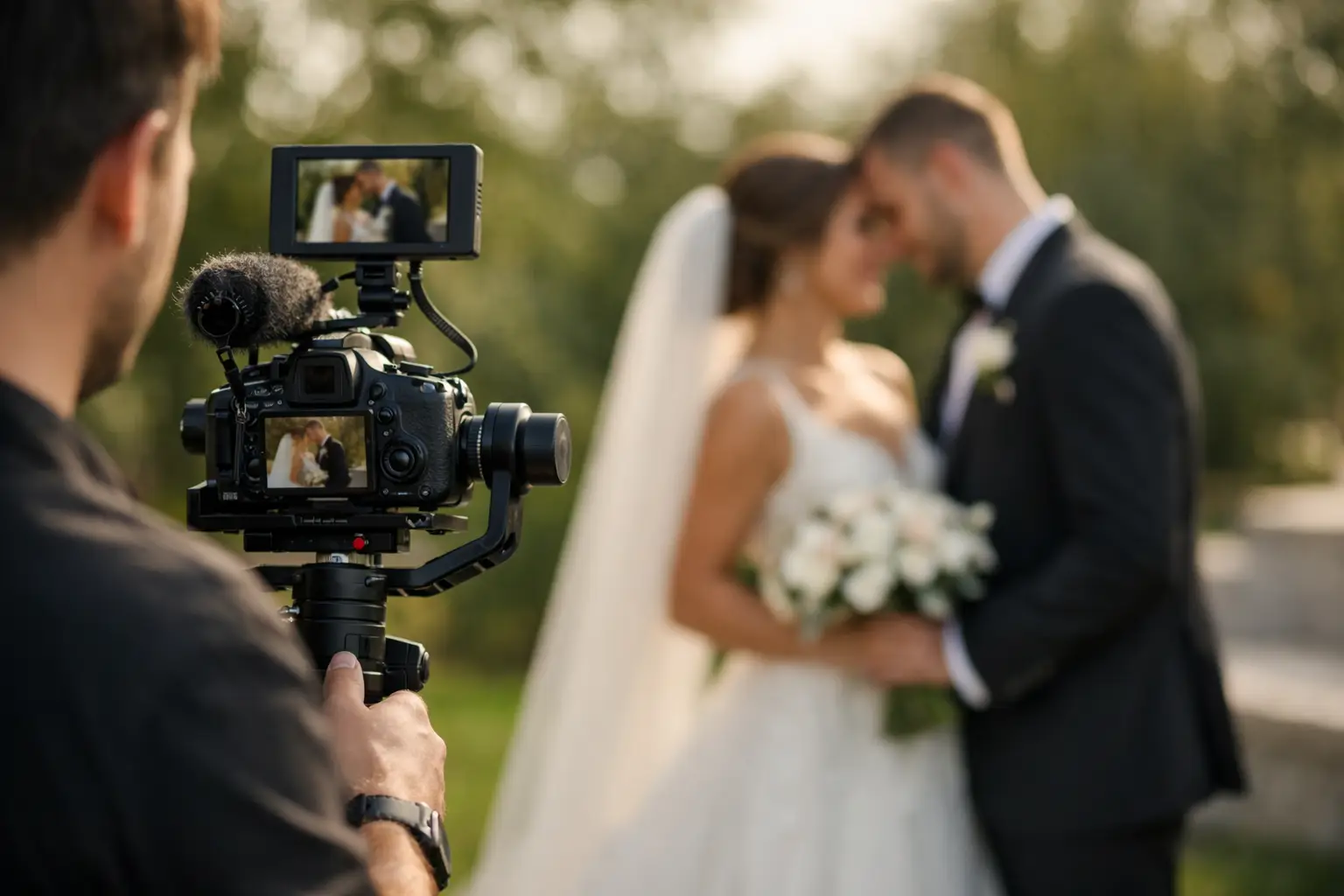
For wedding video coverage during the ceremony, it is important that your videographer is fully set and ready well before it begins, with a particular focus on audio quality. Your videographer should be fully set and ready well before the ceremony begins. This is especially important for audio. Vows, readings, officiant remarks, and musical performances are not moments that can be repeated after guests leave.Professional wedding video coverage is about more than pointing a camera toward the altar. It requires proper placement, clean audio, discreet movement, and an understanding of where the emotional moments are likely to happen. If you have bilingual readings, Spanish-language vows, a cultural tradition, or a nontraditional ceremony format, share that in advance so the team can plan for it.
Professional wedding video coverage is about more than pointing a camera toward the altar. It requires proper placement, clean audio, discreet movement, and an understanding of where the emotional moments are likely to happen. If you have bilingual readings, Spanish-language vows, a cultural tradition, or a nontraditional ceremony format, share that in advance so the team can plan for it.
How Long Should Wedding Video Stay at the Reception?
For many couples, the reception is where the wedding transforms from beautiful to unforgettable. The grand entrance, first dance, parent dances, speeches, cake cutting, packed dance floor, Hora Loca, and final send-off each create a different kind of memory.
A standard 8-hour video package may cover getting ready through the main formalities and the beginning of open dancing. That can work well if your reception timeline is tight and your priority is ceremony emotion plus key reception events.
Ten hours is often a better fit when you want the full arc of the day, particularly if there is travel between locations, a later ceremony, or a reception with major entertainment planned after dinner. It gives your team breathing room instead of requiring them to leave immediately after the cake cutting or just as the dance floor starts building momentum.
If your wedding includes a high-energy dance set, live social media moments, a Hora Loca, or a dramatic late-night finale, talk through those plans before booking coverage. A video team cannot capture the room at its peak if their scheduled end time is an hour before the peak happens.
Why Should Wedding Video Coverage Be Coordinated With Your DJ and MC Timeline?
The best reception footage happens when the entertainment and media teams are working from the same timeline. Your DJ and MC control the pace of entrances, formal dances, toasts, specialty moments, and open dance floor energy. Your videographer needs accurate cues so they can be positioned before each event begins.
This coordination matters most when the schedule changes. Perhaps dinner service runs long, grandparents need a little more time before a dance, or the couple decides to move speeches earlier. A professional MC can communicate those adjustments in real time, helping the video team stay ready without interrupting the guest experience.
It also protects the moments you care about. Nobody wants their first dance video blocked by a vendor crossing the floor or their reception entrance filmed from the wrong side of the room. When entertainment, photography, and videography are planned together, the room feels more polished and the final footage feels more intentional.
What Can Change the Ideal Start Time?
There is no single start time that works for every wedding. A hotel wedding where both partners get ready onsite is easier to cover than a day with separate homes, a church ceremony, and a reception venue across the county. A 1:00 p.m. ceremony needs an earlier start than a 6:00 p.m. ceremony, even if the reception ends at the same time.
Cultural traditions can also reshape coverage. If your celebration includes a tea ceremony, ketubah signing, church rituals, a choreographed surprise dance, or a Hora Loca entrance, those are not extras to squeeze in at the last minute. They are part of your wedding story and should be built into the video schedule from the beginning.
Guest count is another factor. A larger reception may need more time for introductions, dinner, toasts, and formal dances before the dance floor truly opens. If your goal is a film full of guests celebrating rather than an empty floor at 8:30 p.m., make sure coverage extends into the part of the night when your entertainment is doing its job.
Questions to Ask Before You Set Your Coverage Window
Before finalizing a wedding video package, ask what moments are included, how many videographers will be present, and whether travel time counts toward coverage. Confirm how audio will be recorded for the ceremony and speeches. If you are planning a late-night moment, ask directly whether the team will still be there to capture it.
You should also ask your DJ or MC when they expect formalities to happen based on your venue, guest count, and reception flow. A timeline that looks perfect on paper can move quickly once guests arrive. Experienced wedding professionals know where flexibility is needed and where it is not.
For couples who want a simpler planning experience, working with one coordinated entertainment and media team can remove a lot of the guesswork. Electrified DJ Services helps couples align music, MC flow, photography, videography, lighting, and celebration moments so each part of the day supports the next.
Start your wedding video when the emotion starts building, not just when the ceremony starts. Give your team enough time to capture the people, energy, and once-in-a-lifetime reactions you will want to revisit long after the last dance ends.