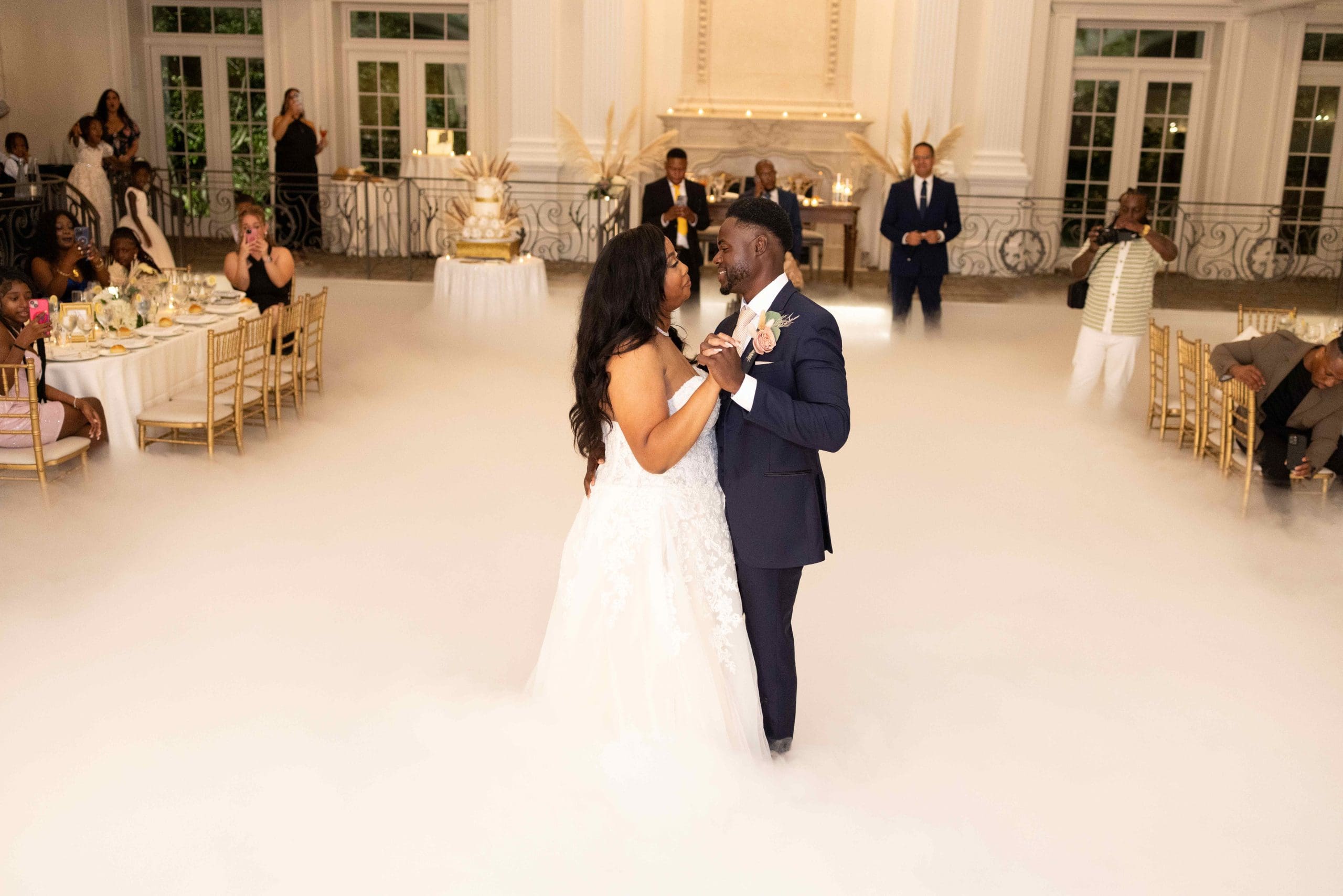
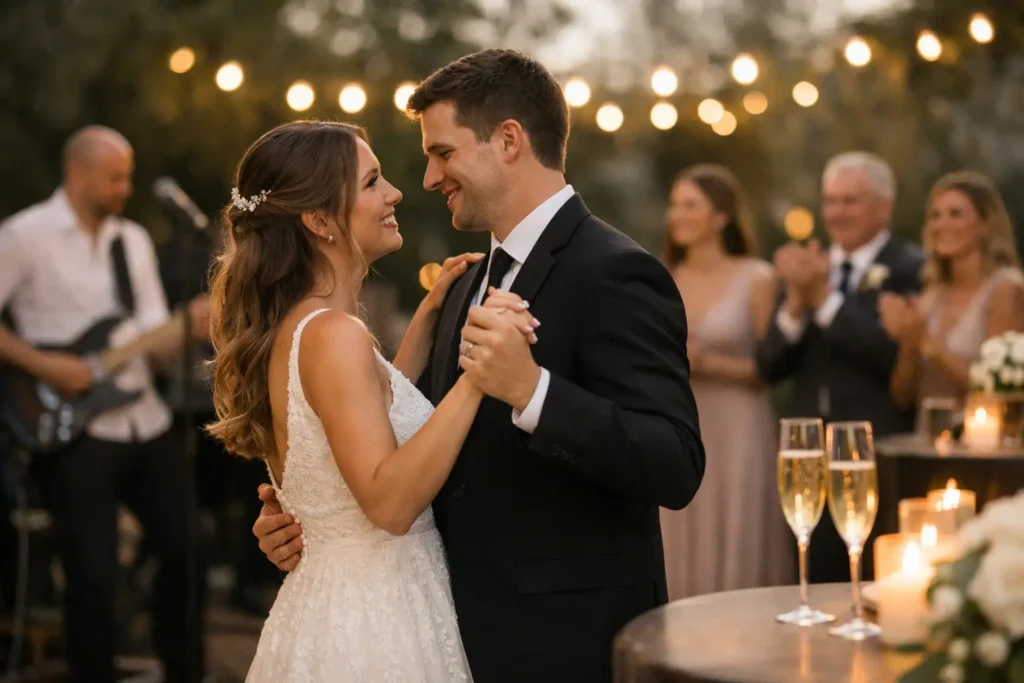
The fastest way to lose a wedding crowd is not bad music. It’s bad timing. A great song played in the wrong moment can flatten the room, while the right song at the right time can pull everyone in – from your college friends to your grandparents to the cousin who swore they never dance. That’s why your wedding reception song order matters just as much as your playlist.

Most couples start by choosing favorite songs. That makes sense, but the stronger approach is to build the night in stages. Your reception has its own rhythm. Guests arrive, settle in, eat, toast, laugh, and then, if the flow is right, head to the dance floor with zero awkward transition. When the order is planned well, the whole night feels easy. When it isn’t, the event can feel choppy even if every individual song is good.

Why wedding reception song order matters

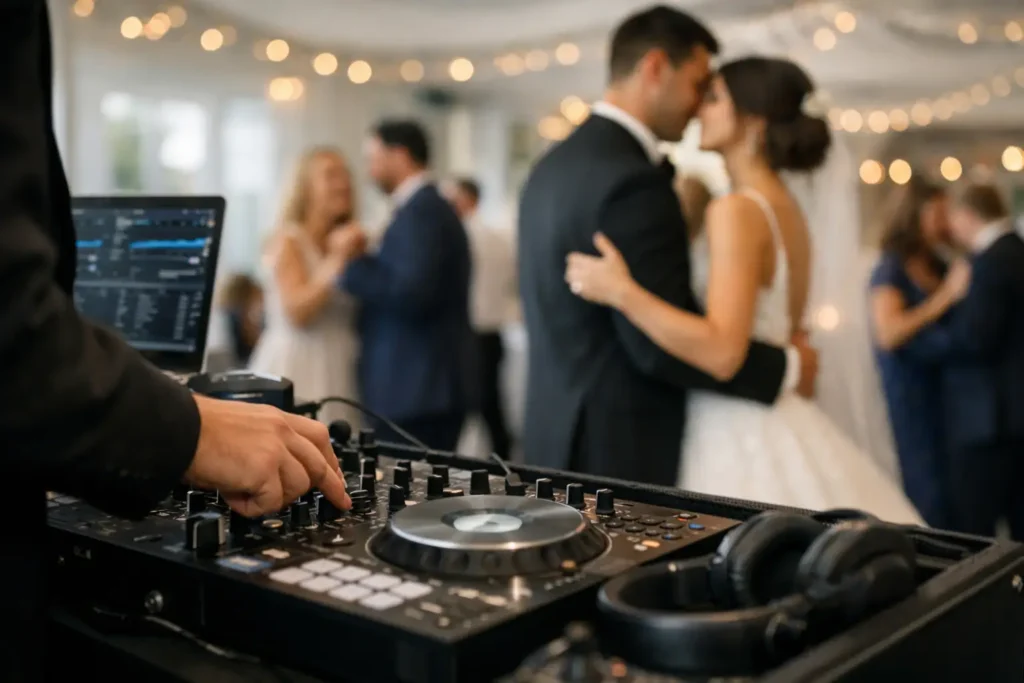
Your reception music is doing two jobs at once. First, it sets the emotional tone for each part of the evening. Second, it helps your DJ or MC move people through the timeline without the event feeling overproduced.

That balance is where a lot of couples get stuck. They want a packed dance floor, but they also want sentimental moments to land. They want songs that reflect their personality, but they do not want the night to feel random. The answer is not choosing between fun and structure. It is using structure to make the fun hit harder.

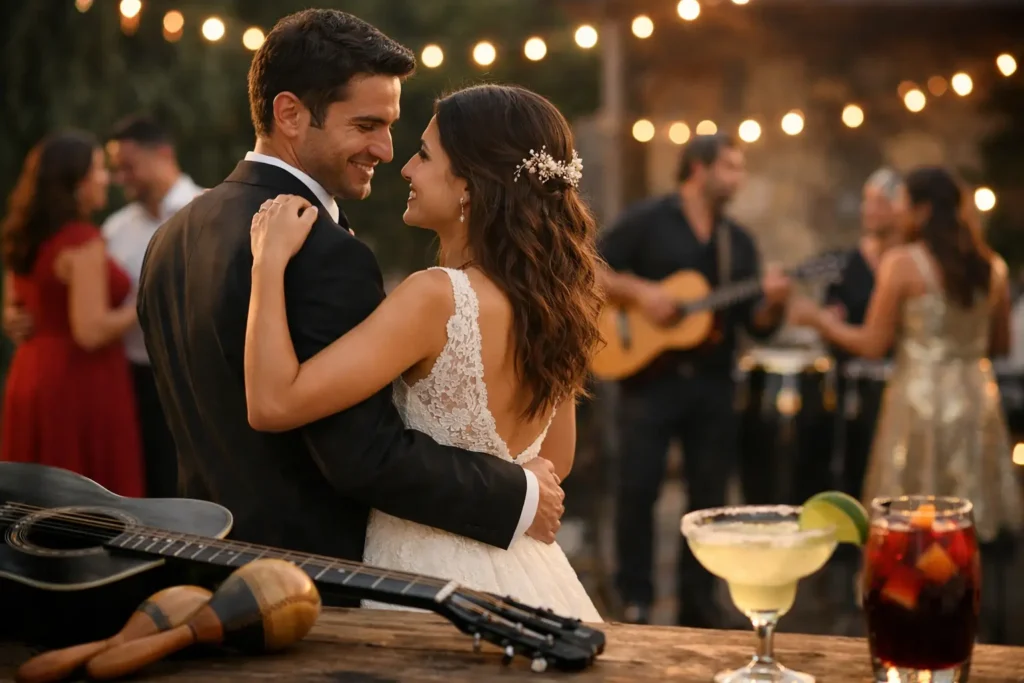
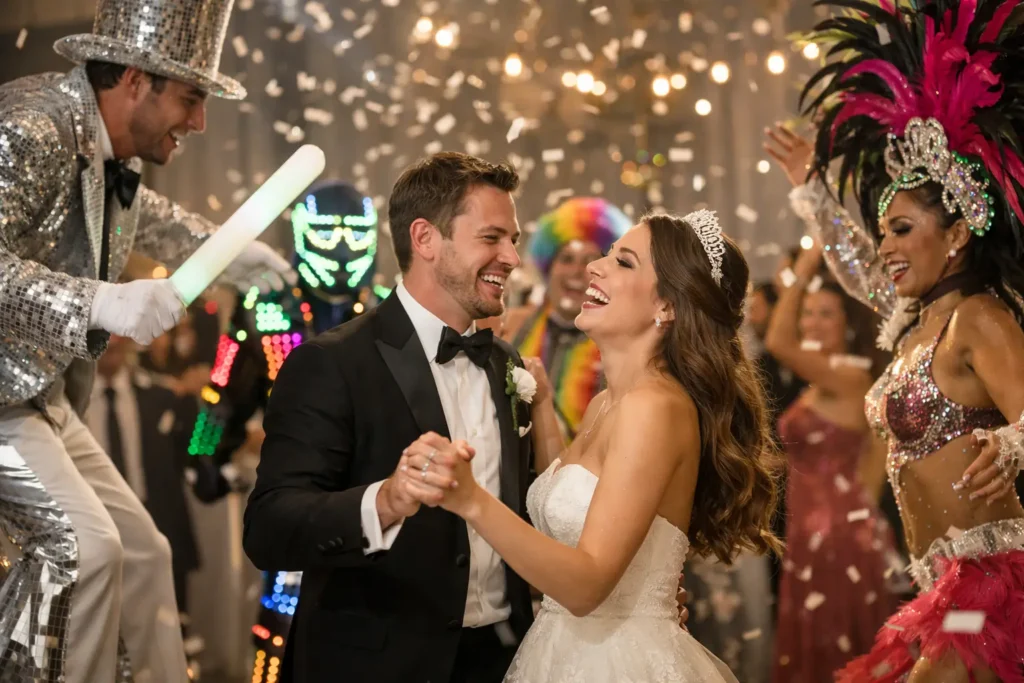
Think of your reception less like a playlist and more like a live experience. The order should support entrances, first dances, parent dances, dinner, speeches, cake cutting if you are doing one, and open dancing. Depending on your crowd, it may also need to support cultural traditions, bilingual music choices, or specialty moments like a Hora Loca set. A smart sequence keeps those pieces connected instead of making them feel like separate events happening in the same room.

A wedding reception song order that feels natural

There is no single perfect formula, but there is a proven flow that works for most weddings.

Guest arrival and room-open music

This is not the time for your biggest party songs. Guests are finding tables, greeting family, ordering drinks, and taking in the room. Music here should feel welcoming and upbeat without demanding attention. Think polished, warm, and social.

This is where couples sometimes go too hard too early. If the energy peaks before your grand entrance, you have nowhere to build. A better move is using familiar songs with a lighter feel – soul, acoustic covers, classy pop, soft R&B, jazz-pop, or romantic favorites that fit your style.

Grand entrance songs

Once introductions start, the energy should rise fast. Wedding party entrances can be fun and playful, but they still need to fit the room. A song that sounds hilarious in your car can feel cringey in a ballroom if it drags on too long.

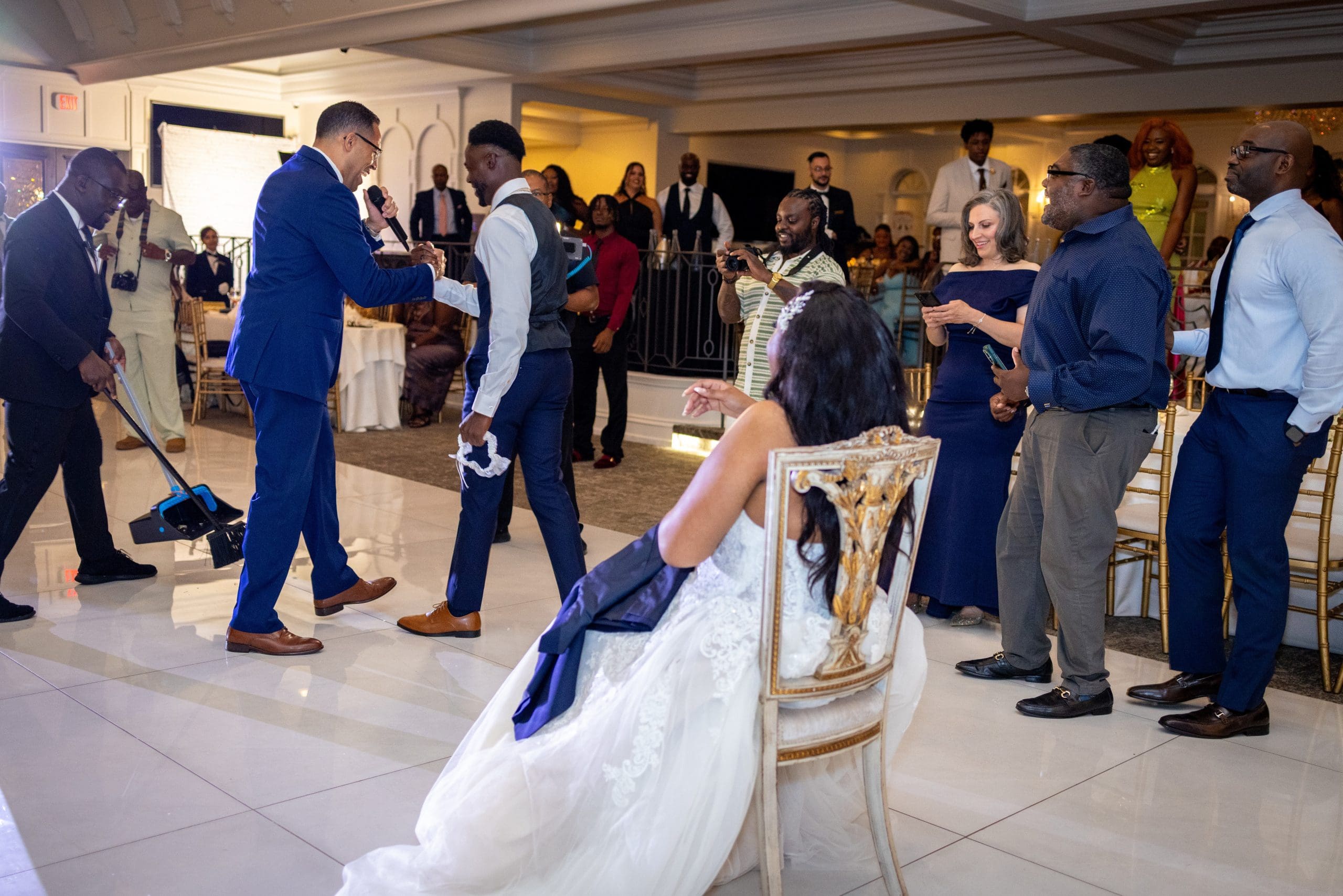
For most couples, short, high-impact entrance cuts work best. You want momentum, not a three-minute performance for each pair. Then your own entrance should feel like a level up. This is where a strong DJ earns their keep – clean intros, confident MC timing, and the right amount of hype without turning it into a nightclub unless that is your vision.

First dance and parent dances

These songs usually come early, and for good reason. Once dinner service gets moving and guests start mingling, it becomes harder to get everyone’s attention for emotional spotlight moments.

That said, the order can vary. Some couples like to go straight from grand entrance into first dance for maximum focus. Others prefer to sit briefly, welcome guests, and then move into formal dances. Either can work. The best choice depends on your timeline, your photographer and videographer coverage, and whether you want the emotional tone to hit early or be spaced out.

Song length matters here too. A meaningful song is great. A five-minute song can feel endless under a spotlight. If you love a longer track, ask for a shortened edit. Nobody in the room is thinking, I hope this dance lasts another two minutes.

Dinner music

Dinner is where the reception breathes. Music should support conversation, not compete with it. The best dinner sets still have personality, but the volume and pacing stay controlled.

This is a great place to bring in your taste in a more relaxed way. Maybe that means classic Sinatra, 90s R&B, Latin ballads, Motown, country love songs, or modern acoustic tracks. The point is not to play background filler. It is to keep the room feeling alive while guests eat and connect.

If you are planning speeches during dinner, the music should leave space for those transitions. Nothing kills a heartfelt toast faster than a clumsy audio shift. Clean fades, proper microphone levels, and a DJ who knows when not to force energy are part of making the whole night feel polished.

Cake cutting, special moments, and transition songs

Not every wedding includes a cake cutting or bouquet toss, and that is completely fine. Formalities should fit your event, not a checklist from 2009. But if you are doing any feature moments after dinner, this is usually the point where they happen.

The music here should help bridge dinner into dancing. That means moving from mellow and social into more recognizable, upbeat tracks. This transition is often overlooked. Couples focus on the first dance and the dance floor, but the handoff between those phases is where the room either wakes up or stays seated.

A few well-chosen singalong favorites can do a lot of work here. Not full send yet. Just enough to shift the room from listening mode into party mode.

How to build the dance floor in stages

Open dancing works best when it ramps up. If your wedding reception song order jumps straight from salads to peak club bangers, you risk burning the room too fast. Guests need a runway.

Start broad, then get specific

The first 15 to 20 minutes of dancing should invite the widest range of guests possible. This usually means familiar, upbeat songs across generations. Think wedding classics, feel-good pop, throwbacks, disco, Motown, or crossover Latin hits depending on your crowd.

This is when older relatives, younger cousins, and your bridal party can all share the floor. If that opening stretch lands, the room starts to trust the DJ. Once that trust is there, it becomes much easier to move into more specific genres and bigger energy swings.

Save your niche favorites for the right pocket

Every couple has songs that mean a lot to them but may not hit with every guest. Those songs still belong in the night. They just need the right placement.

Maybe your friends will go wild for pop-punk, Afrobeat, reggaeton, house, or 2000s hip-hop. Great. The key is dropping those styles when your core dancers are already in motion, not using them as your first attempt to fill the floor.

That is one of the biggest trade-offs in reception planning. Personal music choices matter, but crowd flow matters too. The best receptions make room for both.

Think in waves, not one long sprint

A packed dance floor does not mean every song has to hit maximum intensity. Strong DJs read the room and create waves. Big singalong. Slight pullback. Rebuild. Big dance moment. Quick reset. Then another run.

That pacing keeps the floor from getting tired. It also creates room for requests, cultural sets, and surprise moments without making the night feel messy.

If you are planning a bilingual or multicultural reception, this matters even more. The order should give each side of the guest list moments that feel like theirs, while keeping the event unified. Done well, that mix feels electric. Forced poorly, it can feel like the room is splitting in half.

Common wedding reception song order mistakes

The biggest mistake is treating every formal song as equally important. They are not. Your first dance deserves attention. A cake cutting song may not need a major spotlight. Prioritize the moments your guests will actually feel.

Another common issue is overloading the early reception with slow songs. Romance matters, but too much slow pacing in a row can drain momentum before dancing even starts.

Then there is the opposite problem – couples who want nonstop energy from the second they enter. That can work for a very specific crowd, but most weddings need contrast. High energy works better when the night has somewhere to build from.

Finally, do not ignore logistics. Your song order should match catering timing, photo coverage, and any venue restrictions. Great entertainment is not just about song choice. It is about execution.

The best song order is customized, not copied

Pinterest timelines and Spotify playlists can help with ideas, but they cannot read your room. Your guest mix, your family dynamics, your culture, and your priorities all shape what order makes sense.

A formal black-tie wedding may need a smoother, more gradual lift. A lively multicultural crowd may be ready for a faster jump into dancing. A Sunday afternoon reception might call for a different pace than a Saturday ballroom party. It depends, and that is exactly why customization matters.

At Electrified DJ Services, this is where planning makes the difference. The goal is not to force your wedding into a formula. It is to create a reception flow that feels like you and keeps the room with you from the first entrance to the last song.

If you are building your timeline now, do not start by asking what songs you need. Start by asking how you want each part of the night to feel. That is usually where the right order begins.
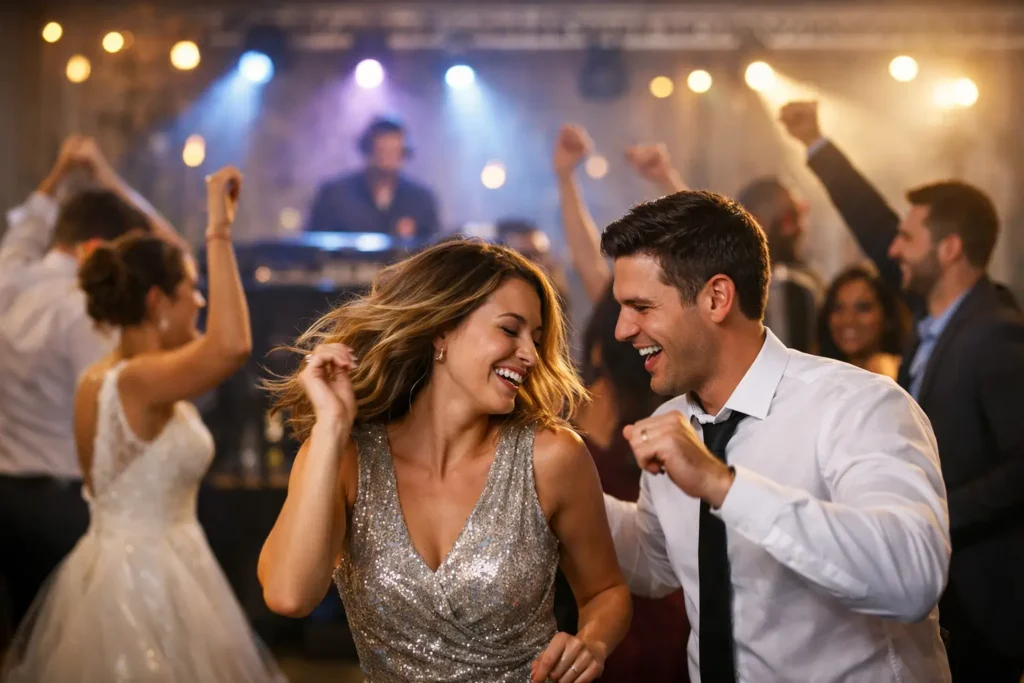
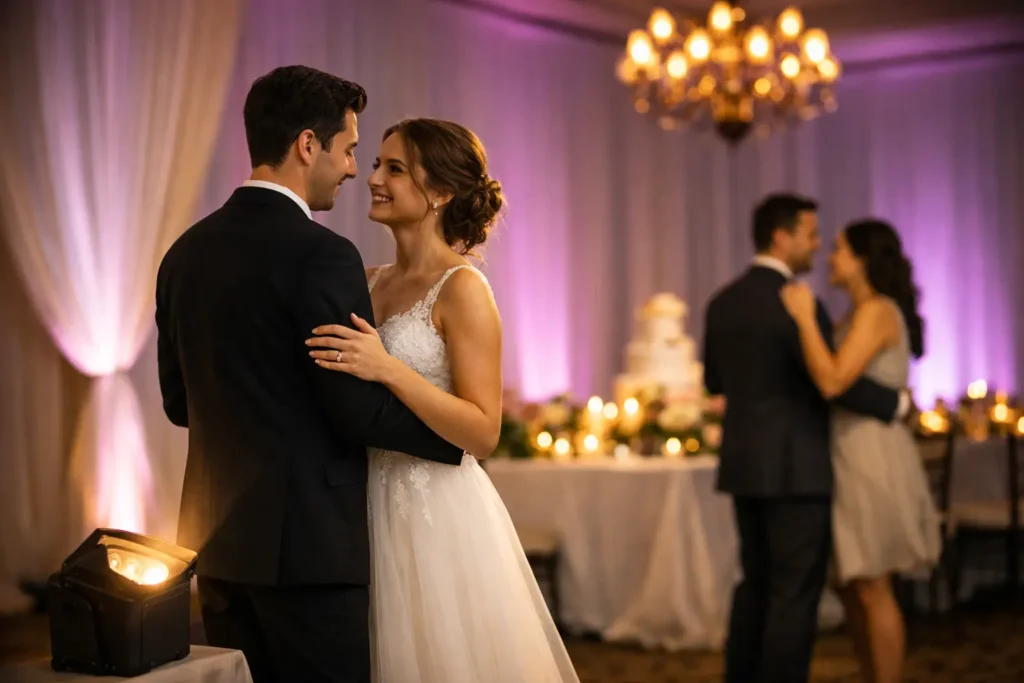
La pista de baile suele decir la verdad antes que nadie. Si los invitados se van dirigiendo al bar, miran el móvil o se quedan pegados a sus asientos después de cenar, es que algo no va bien. Saber cómo conseguir que los invitados sigan bailando no consiste en poner la música a todo volumen y cruzar los dedos. Se trata de saber elegir el momento adecuado, de la personalidad, de la selección de canciones y de crear el tipo de ambiente que haga que la gente quiera disfrutar del momento.

En las grandes bodas y eventos privados,el baile no surge por casualidad. Se construye. La energía comienza mucho antes de que suene la primera gran sesión de baile, y cada decisión a lo largo del proceso es importante: desde la gran entrada hasta la iluminación, pasando por cómo reacciona el DJ cuando cambia el ambiente en la sala. Cuando las parejas y los organizadores quieren que la pista esté llena, el objetivo nunca debe ser forzarlo. El objetivo es conseguir que bailar resulte natural, emocionante y fácil de seguir.

Para que los invitados sigan bailando, lo primero es planificar el programa de la fiesta

Para que la pista de baile se llene, es fundamental contar con un programa bien estructurado. Si las formalidades se alargan demasiado, los invitados se impacientan. Si el servicio de la cena se hace pesado, la energía decae. Si la primera sesión de baile libre empieza demasiado tarde, la gente se dedica a charlar y nunca vuelve a animarse del todo.

Los momentos más impactantes son los que mantienen el impulso. Eso no significa precipitarse en los momentos importantes, sino espaciarlos de forma que se proteja la fiesta. Los brindis deben parecer intencionados, no interminables. Los bailes especiales deben tener su momento de protagonismo, pero también deben conducir a algo. Una vez que el público esté listo para celebrar, hay que abrir la pista mientras ese entusiasmo aún está fresco.

Aquí es donde la experiencia marca la diferencia. Un DJ que entiende de bodas y eventos en directo no se limita a poner música. Se encarga de gestionar la energía en tiempo real. Sabe cuándo dejar que un momento respire y cuándo animar al público.

Las primeras canciones adecuadas son más importantes de lo que la gente cree

Los primeros 10 o 15 minutos de baile libre pueden marcar el tono del resto de la noche. Si las primeras canciones son demasiado específicas, demasiado lentas o demasiado desconocidas, los invitados se muestran reticentes. Una vez que cunde la reticencia, resulta más difícil recuperar el ritmo.

Si quieres saber cómo conseguir que los invitados no dejen de bailar, empieza con canciones que se reconozcan al instante y que inviten a moverse. Esto no significa que todos los eventos deban empezar de la misma manera. Una boda con invitados principalmente familiares y de diferentes edades requiere un comienzo diferente al de una fiesta de cumpleaños con un público más joven o un baile de fin de curso. La clave está en empezar con confianza.

Un DJ inteligente suele empezar con canciones que invitan a una amplia participación y, a partir de ahí, va desarrollando la sesión en función de la respuesta del público. Cuando el público confía en la música desde el principio, los asistentes se muestran más dispuestos a dejarse llevar por la energía y a adentrarse en estilos más novedosos, temas clásicos, sesiones de música latina, discos de discoteca, bailes en fila o canciones para cantar a coro.

Para que la pista de baile esté llena, hace falta variedad, no aleatoriedad.

Los invitados siguen bailando cuando la música resulta fresca, pero a la vez coherente. Abusar de un mismo género puede hacer que se vacíe la pista, aunque ese género sea popular. Por otro lado, pasar de un estilo a otro sin orden ni concierto puede romper el ritmo.

Las mejores sesiones de baile se dirigen con un propósito. Puedes pasar de un éxito pop actual a un tema clásico de la década de los 2000, luego al hip-hop y, a continuación, a un éxito latino que atraiga a otra parte del público. Si esa transición se hace con fluidez, resulta emocionante. Si resulta brusca, los invitados se marchan.

Esta es una de las mayores diferencias entre una lista de reproducción y un DJ en directo. Una lista de reproducción no puede interpretar el lenguaje corporal. No puede percibir que los invitados de más edad están listos para un momento Motown, ni que las amigas de la universidad de la novia esperan una canción animada para cantar a coro, ni que la sala está preparada para una interacción bilingüe con el público. Una buena mezcla es una cuestión técnica, pero saber leer al público es lo que mantiene viva la pista de baile.

La lista de invitados debe determinar la selección musical

No hay dos eventos que necesiten la misma banda sonora. Una de las formas más rápidas de perder el interés del público es organizar la velada basándose únicamente en las canciones favoritas de los novios o en las suposiciones del organizador. Los gustos personales importan, pero también lo hace el público al que has invitado.

Una boda en la que conviven varias generaciones requiere variedad. Un evento multicultural puede necesitar una combinación bien pensada de música en inglés y en español. Una fiesta con muchos bailarines admite sesiones más largas y llenas de energía. Un público más reservado puede necesitar canciones que le resulten familiares antes de atreverse con otras más atrevidas.

Eso no significa intentar complacer a todo el mundo en todo momento. Eso es imposible. Significa crear el equilibrio necesario para que los distintos grupos tengan su momento y nadie sienta que la noche se ha olvidado de que estaban allí. El entretenimiento inclusivo mantiene a más gente involucrada, lo que, naturalmente, hace que la pista de baile esté más animada.

La energía del maestro de ceremonias puede ser determinante para la participación

La música es el motor, pero el presentador suele marcar el tono social. Un presentador seguro de sí mismo y optimista puede hacer que los asistentes se sientan unidos sin que parezca forzado ni exagerado. Esto es importante porque los invitados se dejan llevar por la energía que les rodea.

Una introducción poco convincente al baile puede hacer que la gente se quede esperando a que alguien más dé el primer paso. Una introducción contundente da luz verde. La voz adecuada en el momento adecuado puede hacer que el ambiente pase rápidamente de pasivo a activo. Esto es especialmente importante durante las transiciones: después de la cena, tras los bailes formales o cuando los invitados se han ausentado para hacerse fotos, tomar el postre o escuchar los discursos.

La contrapartida es que hablar demasiado puede acabar con el buen ambiente. Nadie quiere una fiesta en la que se sienta interrumpido cada 10 minutos. Lo ideal es un maestro de ceremonias que sepa animar al público, dar instrucciones claras y, después, hacerse a un lado para que la música haga su trabajo.

La iluminación influye en el comportamiento

La gente baila de forma diferente según el ambiente. Las luces de la sala, si son muy intensas, hacen que el ambiente resulte formal. Una iluminación dinámica, en cambio, crea un ambiente festivo. Ese cambio no es meramente superficial: influye en lo a gusto que se sienten los invitados a la hora de lanzarse a la pista.

Una buena iluminación ayuda a crear una señal visual de que es hora de celebrar. La iluminación de fondo, los efectos en la pista de baile y la iluminación inteligente pueden contribuir a definir el espacio de la fiesta y hacerlo más acogedor. Los invitados se animan más a unirse a la fiesta cuando la pista parece cobrar vida.

Aquí también hay que buscar un equilibrio. Excederse con los efectos puede resultar molesto, sobre todo en bodas elegantes o en eventos con invitados de diferentes edades. La mejor configuración es aquella que realza el ambiente en lugar de dominarlo. Cuando la iluminación, la música y la presencia del maestro de ceremonias se combinan a la perfección, el espacio transmite una sensación de coherencia.

Procura que las interrupciones sean breves y valgan la pena

Cada pausa en el baile supone un gasto de energía. A veces, las pausas son necesarias. El corte de la tarta, una actuación sorpresa, una avalancha de gente en el fotomatón o una tradición significativa pueden encajar perfectamente en la velada. La clave está en asegurarse de que esos momentos se sitúen en el momento adecuado y se gestionen de forma eficiente.

Los largos intervalos son los momentos en los que la pista de baile se queda vacía. Si los invitados se alejan demasiado para charlar entre ellos, salir al aire libre o hacer largas colas para comer algo a altas horas de la noche, puede resultar difícil volver a reunirlos a todos a la vez. Por eso, el desarrollo del evento es tan importante como la elección de las canciones.

En los eventos más destacados, el entretenimiento y la logística se complementan mutuamente. Los invitados saben en todo momento lo que está sucediendo, las transiciones son fluidas y los momentos clave no se alargan en exceso. Ese tipo de coordinación es una de las razones por las que muchas parejas prefieren que un solo equipo se encargue de múltiples aspectos del entretenimiento, en lugar de tener que coordinar a distintos proveedores con prioridades diferentes.

Las peticiones deben gestionarse, no seguirse a ciegas

Las peticiones pueden ser estupendas. Hacen que los invitados se sientan partícipes y, a veces, revelan exactamente lo que necesita la sala. Pero si todas las peticiones se atienden de inmediato, la velada puede perder su ritmo.

Un DJ profesional sabe cómo filtrar las peticiones teniendo en cuenta el panorama general. A veces, la canción solicitada es perfecta, pero aún no es el momento adecuado. A veces, vacía la pista cada vez que suena. A veces, funciona para una mesa y para nadie más. Mantener a los invitados bailando significa conservar el ritmo, incluso cuando eso implique decir que no o esperar al momento adecuado.

Lo mismo ocurre con las listas de canciones que no hay que poner. Son igual de útiles. Evitar las canciones que molestan a la pareja o que estropean el ambiente puede ser tan importante como elegir los éxitos adecuados.

Las mejores pistas de baile transmiten una sensación de intimidad

Los invitados saben distinguir cuándo una fiesta resulta genérica. También saben cuándo parece pensada especialmente para las personas que están allí. Eso es lo que les mantiene interesados. Una pista de baile llena suele incluir canciones vinculadas a tradiciones familiares, recuerdos de la universidad, raíces culturales o temas favoritos compartidos que provocan una reacción inmediata.

Aquí es donde la personalización marca realmente la diferencia. Una sesión bilingüe bien organizada puede atraer a más invitados. Una «Hora Loca» en el momento adecuado puede generar una oleada de emoción. Una sesión retro que dé en el clavo con la época adecuada puede atraer a todo un grupo de amigos de una sola vez. Los toques personales crean una conexión emocional, y la conexión emocional hace que la gente siga participando.

Si estás organizando una boda o un evento privado, la verdadera clave para que los invitados no dejen de bailar es muy sencilla: organiza la velada en función de tu público, no de suposiciones. Es importante que la música sea buena. Es importante que el ritmo sea el adecuado. Es importante que la puesta en escena sea excelente. Pero lo más importante es contar con un equipo de animación que sepa leer el ambiente y reaccionar antes de que la energía decaiga. Cuando los invitados se sienten incluidos, a gusto y emocionados, dejan de ser meros espectadores de la fiesta y empiezan a formar parte de ella.

Walk into a ballroom before the lighting is on, and it can feel a little flat – even if the flowers are perfect and the tables are beautifully set. Turn on well-placed uplighting, and the same room suddenly feels warmer, richer, and more like an actual celebration. So, is uplighting worth it for wedding couples to ask about all the time? In many cases, yes – but not because it is trendy. It is worth it when it changes how your room feels, how your photos look, and how your guests experience the night.

Is uplighting worth it for wedding couples planning?

The honest answer is that it depends on your venue, your priorities, and the kind of atmosphere you want. Uplighting is not one of those wedding add-ons that every couple must have. But it is one of the few upgrades that can change the entire visual impact of a space without requiring a full decor overhaul.

If your reception room is plain, dark, oversized, or missing character, uplighting can do a lot of heavy lifting. If your venue already has dramatic architecture, modern built-in lighting, or outdoor views that carry the room on their own, the effect may be more subtle. That does not make uplifting unnecessary. It just means its value comes down to transformation, not the name of the add-on.

This is where couples sometimes get stuck. They compare uplighting to centerpieces, florals, or upgraded linens as if all decor choices do the same job. They do not. Flowers dress the tables. Lighting shapes the room. And guests notice the room first.

What does uplighting actually change at a wedding

Uplighting is designed to wash walls, columns, draping, and architectural features with color. That sounds simple, but the result is bigger than many couples expect. It adds depth to large blank spaces, softens sterile banquet halls, and helps your room feel intentional rather than rented.

It also helps create a mood that matches your event. Soft amber or warm white can make a formal reception feel elegant and romantic. Rich pinks, purples, or blues can add energy without looking over-the-top when used correctly. During dancing, color changes can make the room feel more alive and connected to the music.

That last point matters. Your wedding is not just a dinner with better outfits. It is a live event. Energy builds through sight and sound together. When the music, MC, and lighting are working in sync, the room feels more immersive. Guests may not say, “The uplighting was amazing,” but they absolutely feel the difference.

When uplighting is most worth the money

Uplighting usually delivers the biggest return in venues that need help visually. Think classic banquet halls, hotel ballrooms, country club spaces, community venues, and reception rooms with neutral walls. These spaces can host beautiful weddings, but they often start as blank canvases. Lighting gives them personality fast.

It is also worth serious consideration if you care a lot about photography and video. Light affects everything the camera sees. While uplighting is not a replacement for proper event lighting or on-camera flash, it can improve background depth and make wide room shots feel much more polished. Your first dance photos, entrance moments, and dance floor images often look more dynamic when the room has dimension instead of plain dark walls.

Another strong case for uplighting is when you want a high-end look without spending heavily on extra decor. If you are choosing between adding more stuff to the room or making the whole room look better, lighting often wins. A dozen carefully placed uplights can have more visual impact than many smaller decorative details that guests barely register.

For larger guest counts, the value tends to go up. Big rooms can swallow energy. Lighting helps pull the space together so it feels full, styled, and event-ready even before the dance floor opens.

When uplighting may not be necessary

There are weddings where uplighting is more of a nice extra than a smart priority. If your reception is outdoors under a tent with natural landscaping doing most of the visual work, the payoff may be limited unless the tent itself is being lit strategically. If your venue already includes strong ambient lighting design, statement chandeliers, textured walls, or floor-to-ceiling windows that define the space, you may not need much enhancement.

It may also be lower on the list if your budget is tight and you are choosing between uplighting and services that directly affect the guest experience, such as a skilled DJ, clear sound, timeline management, or quality photo and video coverage. Guests will remember how the night felt. The entertainment side still carries more weight than almost any decor upgrade.

That is why the best planning conversations are not about whether uplighting is “worth it” in general. They are about whether it is worth it for your wedding after the essentials are covered.

The budget question couples really mean

Most couples asking if uplighting is worth it are really asking a different question: will people notice enough to justify the cost?

Yes, they usually will – just not in the way they notice a photo booth or a packed dance floor. Uplighting is a background feature that changes the total impression of the room. It is more like great staging than a headline attraction. People may not point to it directly, but they often describe the wedding as beautiful, elegant, romantic, fun, or upscale because of the environment it helped create.

That makes it easier to justify if you are investing in the full guest experience and want the reception to feel cohesive from cocktail hour through the last dance. It is harder to justify if you are purely checking boxes or adding upgrades because you feel like weddings are supposed to include them.

The smart move is to think about impact per dollar. If your venue looks underwhelming in its standard setup, uplighting can be one of the strongest visual upgrades available. If your room already looks fantastic on its own, that same budget may be better spent elsewhere.

How to know if your venue needs it

Photos of your venue are your best starting point, but be careful. Marketing photos often show rooms with upgraded lighting already in place. Ask to see the space in a standard event setup and, if possible, in evening conditions. A room can look bright and charming at a daytime tour, then feel very different once the sun goes down and guests arrive.

Pay attention to the walls, ceiling height, room color, and any architectural features. Plain beige walls, wide open corners, and dark perimeter areas are all signs that uplighting could help. White draping, columns, alcoves, and textured surfaces also tend to look great with uplights because they catch and reflect color well.

It also helps to ask how the room transitions from dinner to dancing. Some spaces feel disconnected at night unless lighting ties the room together. If your entertainment team handles both music and lighting, they can usually guide you toward a setup that supports the actual flow of the reception instead of treating lighting like a separate decoration.

Color choices matter more than couples think

One reason some people feel underwhelmed by uplighting is simple: bad color choices. Not every wedding needs bright magenta walls or nonstop color changes. Elegant uplighting usually looks best when it complements the room and your overall design rather than competing with it.

Warm white, amber, blush, soft blue, and muted lavender are popular because they photograph well and flatter formal spaces. Deep colors can work beautifully too, especially later in the night when the energy shifts toward dancing. The best setups often evolve with the event instead of blasting the same intense color all evening.

This is where experience matters. A team that understands weddings will know how to balance romance during dinner with excitement during open dancing. That balance is a big part of whether uplighting feels classy or distracting.

Should you book uplighting as part of a package?

Usually, yes – especially if you want less stress and a cleaner result. When your DJ or entertainment company also manages the lighting design, setup is more coordinated and the room tends to feel more unified. Music cues, special dances, and lighting changes can work together instead of feeling disconnected.

For couples planning in busy wedding markets like North Jersey, convenience matters too. Fewer vendors usually means fewer emails, fewer setup questions, and fewer chances for miscommunication on the wedding day. If you are already booking a professional entertainment team, adding uplighting through the same provider can be one of the simplest ways to elevate the room without creating extra planning work.

Electrified DJ Services sees this all the time with wedding receptions that need both strong energy and strong visuals. The right lighting does not replace great entertainment, but it absolutely helps the room rise to the level of the celebration.

So, is uplighting worth it for a wedding?

If your goal is to make an ordinary room feel polished, romantic, and guest-ready, uplighting is often worth every penny. If your venue already brings the wow factor and your budget has tighter priorities, it may be optional. The best answer is not based on trend pressure. It is based on how much transformation your space needs and how much the full atmosphere matters to you.

A wedding should feel like your night from the moment guests walk in. If uplighting helps create that feeling, it is not just an add-on. It is part of the experience.

You can feel the difference before you can explain it. A photo freezes your partner’s face during the first look. A video lets you hear the breath they took right before turning around. That is the heart of wedding videography versus photography – not which one is better, but which kind of memory matters most to you when the music stops and the room clears out.

Couples usually start this conversation with budget, and that makes sense. Weddings have a way of turning every nice idea into a line item. But this choice is not only financial. It affects how your day is documented, how your timeline flows, and what you will actually revisit years from now. Some couples want the framed image that lives on a wall. Others want to hear the vows again, see their grandparents laugh in motion, and relive the energy of a packed dance floor.

Wedding videography versus photography: what each one captures

Photography is built for moments you want to hold still. The dress hanging in the window. The ceremony kiss. Your family gathered in one place, looking their best and facing the same direction for once. Great wedding photography gives you composition, lighting, and split-second timing. It turns a fast day into a collection of images you can return to anytime.

Videography captures movement, sound, and rhythm. It preserves the pace of the ceremony, the tremble in a speech, the cheering when you make your grand entrance, and the way your guests actually interacted with the celebration. A strong wedding film can make your day feel alive again, not just remembered.

That difference matters more than many couples expect. Photography tends to document what the day looked like. Videography tends to document what the day felt like. The strongest wedding coverage often includes both because they serve different emotional jobs.

Why photography is usually the first priority

If you can only choose one, photography is often the more practical starting point. Photos are easier to share, easier to print, and more likely to become part of your everyday life. They go into albums, frames, thank-you cards, and family keepsakes. They are also quicker to skim through when you want a snapshot of the day instead of a full replay.

Photography is also less dependent on sound and less vulnerable to certain event-day issues. If your reception gets loud, if a microphone cuts out for a second, or if the room lighting changes fast, a skilled photographer can still produce excellent results. That reliability is one reason couples who need to make a hard budget choice often secure photography first.

There is another factor that does not get talked about enough. Many families are simply more accustomed to photos. Parents and grandparents may expect an album. They know what to do with prints. Wedding photography fits naturally into how families already preserve milestones.

Why videography has become a bigger priority

Even couples who never planned to book video often change their minds once they think about what would be missing. Vows are the biggest example. So are speeches, cultural traditions, and the atmosphere of the reception. If your celebration includes bilingual moments, live music, a packed dance floor, or high-energy entertainment, video can preserve the personality of the event in a way still images cannot.

That is especially true for couples who care deeply about guest experience. Your wedding is not just portraits and details. It is movement, reaction, sound, and connection. A great video shows how the room responded. It captures your flower girl sprinting down the aisle, your uncle starting the dance circle, and the moment everyone shouted the chorus at the same time.

For many couples, videography becomes more meaningful after the wedding than before it. Photos are expected. Video can be the surprise favorite because it brings back voices, pacing, and little moments you did not fully absorb in real time.

The real trade-off: budget, time, and attention

This is where wedding videography versus photography gets real. Adding both services usually gives you the fullest story, but it also affects your budget and planning. The question is not just whether you want both. It is whether you want both enough to prioritize them over another upgrade.

If you are comparing costs, think beyond package pricing. Ask what is included in coverage hours, editing, number of shooters, turnaround time, and final deliverables. A lower price may mean shorter coverage or fewer edited assets. A higher price may include a second shooter, better audio capture, or more complete storytelling.

Time on the wedding day matters too. Photography often requires more directed moments, especially during family formals, wedding party shots, and couple portraits. Videography can be more observational, but it still needs coordination, especially if cinematic footage or audio setup is involved. The best teams work together so your coverage feels organized instead of crowded.

That is one reason bundled services can help. When your entertainment and media teams understand event flow together, the day tends to run smoother. The DJ knows when key moments are coming. The photo and video team knows where the action will be. Less handoff usually means less stress.

How to decide what matters most to you

Start with a simple question: when you picture reliving your wedding, what do you see yourself reaching for first?

If the answer is an album on the coffee table, framed portraits in your home, and a gallery you can text to family right away, photography may be your non-negotiable. If the answer is hearing your vows, watching your first dance, or seeing your reception energy come back to life on screen, videography may deserve a bigger place in your budget than you first thought.

Next, think about the character of your wedding. A traditional ceremony with a smaller guest count might lean more heavily on photography if clean portraits and family documentation are your top goals. A celebration with cultural traditions, choreographed dances, emotional speeches, or a high-energy party atmosphere often gains a lot from video.

Your family situation matters too. If loved ones are traveling a long distance, aging, or unable to attend, video can carry extra weight. Hearing someone’s voice and seeing them move naturally on screen is different from seeing one image of them smiling at a table.

When photography alone may be enough

There are weddings where photography-only coverage makes complete sense. If your budget is tight and you want to protect the essentials, photos usually give you the strongest everyday value. If you are not interested in watching long-form footage, if you prefer simple documentation, or if the event is intentionally low-key, you may be perfectly happy with a strong photo package.

This can also work well for couples who care more about the present experience than preserving every detail. Not everyone wants extensive media coverage. Some people want beautiful portraits, a few key candid moments, and the freedom to keep the rest of the day less produced.

When having both is the smartest choice

If your budget allows, both is often the strongest answer because you do not have to force one format to do the other one’s job. Photography gives you the iconic still moments. Videography gives you motion, sound, and atmosphere. Together, they tell a fuller story.

This is especially true for weddings where entertainment plays a major role. If you have a lively MC, custom lighting, packed dance sets, or interactive moments with guests, those are experiences built on movement and reaction. Photos will show that it happened. Video will show what it felt like.

For couples planning in New Jersey, where many weddings blend formal traditions with a real party atmosphere, the combination can be worth it. You get the polished portraits your family wants and the live energy you will want to revisit later.

Preguntas que debes hacerte antes de reservar

Before signing any contract, ask how the photo and video teams coordinate during the ceremony and reception. Ask whether they have worked together before, how they handle low-light environments, and what kind of audio they capture for vows and speeches. Ask to see full galleries and complete films, not just highlight reels.

You should also ask how they manage timelines. A team that understands weddings from both the production side and the live-event side can protect your experience while still getting the footage and images that matter. That balance is huge. You want coverage that feels professional, not invasive.

If you are booking multiple services through one company, make sure the communication process is clear. One team can be a major advantage when it is organized well. It means fewer moving parts, fewer separate conversations, and better coordination across the event. For couples who want less planning stress, that convenience is not a small perk. It is part of the value.

A wedding only happens once, and your memories deserve more than a rushed decision based on what everyone else did. If you are stuck on wedding videography versus photography, stop asking which one wins and start asking which one will matter most to you when this day becomes part of your family history. The right answer is the one that lets you remember your celebration the way you want to feel it again.

La forma más rápida de saber si la lista de reproducción de una boda funciona es muy sencilla: fíjate en la pista de baile después de la cena. Si la abuela, tus amigos de la universidad, tus primos y hasta los que no suelen bailar se van acercando poco a poco a la música, lo has clavado. Por eso es tan importante elegir bien las canciones para el banquete de boda en español. Estas canciones hacen mucho más que llenar la sala de sonido. Generan reconocimiento, movimiento y esos grandes momentos del banquete de los que la gente habla de camino a casa.

Para las parejas que planean una celebración bilingüe o de inspiración latina, el objetivo no suele ser poner solo un estilo durante toda la noche. Las mejores recepciones combinan romanticismo, nostalgia, temas festivos y éxitos crossover de una forma que resulte natural. Un buen DJ sabe leer el ambiente y crear esas transiciones, pero la selección de canciones es lo que realmente marca el tono. Si queréis una pista de baile llena y una recepción con un toque personal, estas son las canciones que merece la pena tener en cuenta.

Cómo elegir canciones para una boda española que realmente funcionen

Una buena lista de reproducción para una boda no es solo una lista de canciones que te gustan. Tiene que funcionar en un espacio real lleno de personas de diferentes edades, con diferentes gustos musicales y distintos niveles de comodidad en la pista de baile. Esto es especialmente cierto en el caso de la música española, ya que una familia puede decantarse claramente por la salsa y el merengue, mientras que otra prefiere más reguetón, bachata o pop latino.

Lo más inteligente es ir por etapas. Empieza con canciones que gusten a todo el mundo y que sean fáciles de reconocer. Después, a medida que el ambiente se vaya animando, ve introduciendo temas más enérgicos propios de la discoteca. Si entre tus invitados hay familiares mayores, no llenes toda la noche de reguetón actual. Si tu público es más joven y le encantan las mezclas de mucha energía, poner demasiados clásicos lentos seguidos puede frenar el ritmo.

Aquí es también donde la personalización cobra importancia. Una celebración familiar puertorriqueña suele tener un carácter diferente al de una boda mexicana, dominicana, colombiana o de culturas mixtas. Hay puntos en común, por supuesto, pero las reacciones más entusiastas del público suelen producirse con canciones que reflejan la identidad de tu pueblo, y no solo con una lista de reproducción genérica de «boda latina».

22 canciones españolas para una boda en las que la pista de baile se llene

Estas canciones no sirven para todo el mundo, pero se ha demostrado que animan al público. Para sacarle el máximo partido, hay que tener en cuenta el momento adecuado, la calidad de la mezcla y el desarrollo de tu recepción.

Éxitos de las primeras épocas de la pista de baile y favoritos para todas las edades

«Suavemente», de Elvis Crespo, es uno de esos temas que pueden animar un local en un santiamén. Es alegre, pegadizo y fácil de seguir para los asistentes de todas las edades.

«La Vida Es Un Carnaval», de Celia Cruz, llena la sala de alegría al instante. Resulta especialmente eficaz cuando se busca un cambio de ambiente festivo tras la cena o las formalidades.

«Vivir Mi Vida», de Marc Anthony, funciona porque resulta inspiradora sin perder el ritmo. Es una de las opciones más seguras y acertadas para un público de diferentes edades.

«Abusadora», de Oro Sólido, es un clásico de las bodas por una razón. Tiene esa energía instantánea del merengue que hace que las parejas, los grupos y los invitados de más edad se pongan a bailar juntos.

«La Gozadera», de Gente de Zona con Marc Anthony, es perfecta para ese momento de la noche en el que la fiesta empieza a convertirse en una auténtica fiesta. Un estribillo potente, una reacción espectacular.

Conceptos básicos de la salsa y el merengue

«Quimbara», de Celia Cruz, es pura energía cuando el público está listo para la salsa. Es mejor ponerla más tarde por la noche, cuando los bailarines se sienten más seguros y el ambiente está en pleno apogeo.

«Valio La Pena», de Marc Anthony, mantiene la energía de la salsa con un toque refinado y romántico. Queda especialmente bien en bodas en las que las parejas buscan una música que resulte elegante, pero que al mismo tiempo se pueda bailar.

«Llorarás», de Óscar D’Leon, es una elección clásica para las familias que saben de salsa. No todo el mundo se sabrá la letra al dedillo, pero el público adecuado sí que lo hará.

«El Africano», de Wilfrido Vargas, es un auténtico éxito en las fiestas. Si a tus invitados les gustan los clásicos del merengue, esta canción puede llenar la pista de baile en cuestión de segundos.

«Oye Mi Canto», de N.O.R.E. con la colaboración de Nina Sky, Daddy Yankee, Gem Star y Big Mato, aporta un toque retro que cala hondo entre los millennials. Consigue tender un puente entre la energía de la música latina y la del público general de forma muy acertada.

Discos de bachata y música romántica para fiestas

«Obsesión», de Aventura, es casi imprescindible si la bachata forma parte de tu fiesta. Te hace sentir nostalgia y te invita a cantarla a coro.

«Propuesta Indecente», de Romeo Santos, es una canción suave, dramática y muy popular. Es ideal para cuando el ambiente ya está animado y las parejas quieren bailar más cerca unas de otras.

«Eres Mia», de Romeo Santos, puede funcionar bien en un ambiente romántico, aunque depende de tus gustos y del público al que te dirijas. Algunas parejas prefieren temas de bachata más sencillos y emotivos, mientras que otras prefieren el éxito que todo el mundo conoce.

«Bachata en Fukuoka», de Juan Luis Guerra, aporta un toque más ligero y musical. Es una elección estupenda si te apetece escuchar bachata sin entrar demasiado en el ambiente de discoteca.

Reggaeton y la energía de la madrugada

«Gasolina», de Daddy Yankee, sigue cumpliendo exactamente con las expectativas de las parejas. Aumenta la energía, anima a la gente y ofrece a los invitados más jóvenes su momento de diversión.

«Danza Kuduro», de Don Omar y Lucenzo, es uno de los temas más infalibles para animar una boda. Incluso los invitados que no suelen bailar saben qué hacer cuando suena esta canción.

«Baila Baila Baila», de Ozuna, Daddy Yankee, J Balvin, Farruko y Anuel AA, es ideal para un público más joven que busca la energía de las fiestas latinas actuales sin que el ambiente se estropee.

«Pepas», de Farruko, es un éxito rotundo, pero no es adecuada para cualquier boda. Funciona mejor a última hora, con un público animado y con parejas que buscan ese ambiente festivo y desenfadado. Si se pone en el momento equivocado, puede resultar demasiado agresiva.

«Taki Taki», de DJ Snake con Selena Gomez, Ozuna y Cardi B, te ofrece toda la fuerza de un tema bilingüe que trasciende géneros. Es una opción acertada para un público variado que busca tanto el sabor latino como la familiaridad de la música mainstream.

Momentos de fusion y para cantar a coro

«Despacito», de Luis Fonsi y Daddy Yankee, sigue siendo una canción ideal para bodas si se utiliza correctamente. La clave está en no darle demasiada importancia si los invitados ya están hartos de escucharla. En algunos casos, sigue teniendo mucho éxito.

«Bailando», de Enrique Iglesias con la colaboración de Gente de Zona y Descemer Bueno, es una de las formas más sencillas de incorporar la energía de las canciones en español a una variada selección musical para una boda.

«Te Bote», de Casper Magico, Nio García, Darell, Nicky Jam, Ozuna y Bad Bunny, puede tener mucho éxito entre el público más joven, pero depende del tipo de público que tengas y de tus criterios respecto a la versión «limpia». Es una de esas canciones en las que el criterio del DJ es fundamental.

Lo que las parejas suelen hacer mal con la música de las bodas en español

El mayor error es considerar toda la música española como una sola categoría. La salsa, la bachata, el merengue, la cumbia, el reguetón y el pop latino provocan reacciones totalmente diferentes. Si los agrupas sin cuidado, la noche puede parecer desordenada en lugar de estar bien planificada.

Otro problema habitual es sobrecargar la lista de reproducción con canciones que les encantan a los novios, pero con las que los invitados no pueden bailar. Vuestra boda debe reflejar sin duda vuestros gustos, pero el banquete también es un evento en directo. Si vuestro objetivo es que los invitados participen, hay que elegir algunas canciones teniendo en cuenta al público.

El momento también es importante. Una canción que arrasa a las 10:45 puede ser un fracaso a las 8:15. Un reguetón muy enérgico demasiado pronto puede dejar la pista vacía. Demasiadas canciones de ritmo medio a última hora de la noche pueden frenar el ritmo justo cuando quieres que la sala alcance su punto álgido.

Cómo conseguir la combinación perfecta para una boda bilingüe

Si en tu lista de invitados hay tanto personas que hablan español como inglés, lo mejor suele ser buscar un equilibrio. Eso no significa dividir la velada en dos mitades estrictas, sino crear una dinámica en la que todos se sientan incluidos.

Una buena estrategia consiste en alternar a lo largo de la noche entre éxitos de baile en inglés que todo el mundo conoce y canciones de banquetes de boda en español, en lugar de aislar cada estilo en su propio bloque. Así se mantiene el ambiente animado en la sala. Además, se evita que una de las dos partes de la familia tenga la sensación de estar esperando a que llegue su turno en la lista de reproducción.

Los anuncios y la labor del maestro de ceremonias también son importantes aquí. Una recepción bilingüe resulta más fluida cuando el equipo de animación es capaz de guiar a los invitados con naturalidad, mantener transiciones fluidas y hacer que todos los asistentes se sientan partícipes de la celebración. Esa es una de las razones por las que las parejas del norte de Nueva Jersey suelen buscar un DJ que pueda encargarse tanto de la música como de la interacción con el público sin que resulte forzado.

La lista de reproducción es solo la mitad del trabajo

Incluso las mejores canciones pueden quedar en nada si la mezcla no es la adecuada, las transiciones son torpes o el DJ no conecta con el público. El entretenimiento en una boda tiene que ver tanto con la secuencia y el ambiente como con la elección de las canciones. Para que la pista esté llena, hay que saber cuándo alargar un estribillo, cuándo pasar a la siguiente canción pegadiza y cuándo cambiar de género antes de que los invitados empiecen a sentarse.

Por eso, la planificación debe ir más allá de limitarse a entregar una lista de Spotify. Piensa en las canciones imprescindibles, las que no deben sonar, las tradiciones familiares y en qué parte de la noche debe reinar un ambiente elegante, desenfrenado, nostálgico o totalmente festivo. Si trabajas con un equipo como Electrified DJ Services, esa conversación debería convertir tus gustos musicales en un plan de acción para la recepción, y no solo en una lista de reproducción.

Las canciones adecuadas pueden hacer que todo el mundo se una, pero lo realmente importante es crear esos momentos en los que cada generación sienta que la fiesta se ha organizado pensando en ella. Empieza por ahí y, normalmente, la pista de baile se encarga del resto.

The fastest way to spot a weak reception plan is a playlist that looks great on paper and falls flat once dinner ends. A strong wedding dj playlist example is not just a list of songs you like. It is a timeline, a mood shift, and a strategy for keeping every part of the night moving without forcing the energy.

That matters because weddings are not regular parties. You are mixing generations, cultures, friend groups, and different expectations in one room. The right music can make that feel effortless. The wrong sequence can empty the dance floor, drag out transitions, or make the night feel disconnected from the couple it is supposed to celebrate.

What a good wedding DJ playlist example actually does

A good reception playlist supports the event, not the other way around. It gives each part of the night its own feel while still sounding cohesive. Guests should never feel like the room is starting over every 20 minutes.

This is where couples often get stuck. They focus on favorite songs, which makes sense, but a wedding DJ is also thinking about timing, pacing, and how people respond in real time. A song that is perfect for a drive with the windows down might not work right after a heartfelt toast. A club hit that always gets your college friends moving might clear out older guests if it lands too early.

The best playlists leave room for personality and flexibility. You want enough structure to cover your major moments, but not so much rigidity that your DJ cannot read the room.

Wedding DJ playlist example by reception moment

Below is a practical wedding dj playlist example built around the flow of a typical reception. It is not meant to be copied song for song. It is meant to show how the night can build naturally.

Guest arrival and pre-reception

As guests enter, the music should feel warm, polished, and upbeat without demanding attention. This is not the time for high-energy dance records. You want people settling in, greeting each other, finding seats, and getting excited for what is coming.

Songs in this section might include:

  • Lovely Day – Bill Withers
  • Signed, Sealed, Delivered – Stevie Wonder
  • Put Your Records On – Corinne Bailey Rae
  • Better Together – Jack Johnson
  • I Choose You – Sara Bareilles
  • L-O-V-E – Nat King Cole

This part works best when the music feels familiar and easy. Think feel-good, not full-throttle.

Grand entrance

Now the room needs a lift. The grand entrance should sound intentional and confident. It can be fun, classy, hype, or somewhere in between, but it should match the couple.

A few common styles work well here. Some couples want an anthemic entrance with songs like Can’t Stop the Feeling or 24K Magic. Others prefer a cleaner, more modern intro with a strong beat and less novelty. The key is choosing something that creates momentum without feeling dated or forced.

First dance and formal dances

This section is about emotional impact, not crowd response. The first dance, parent dances, and any anniversary or family spotlight songs should feel personal. That does not always mean slow. It means meaningful.

Some couples want a timeless ballad. Others want an acoustic cover, a country track, or a song that reflects their culture or shared history. If you are planning a shortened first dance that opens into a dance set, that is often a smart move for couples who want the romance without spending four full minutes in the spotlight.

Dinner music

Dinner is where pacing matters most. The room should feel alive, but conversation still needs to work. This is not background silence, and it is not dance-floor music either.

Great dinner music usually sits in the mid-tempo lane. Think Motown, soft pop, R&B classics, light Latin crossover, and recognizable hits played at the right volume. Songs like Just the Two of Us, Ain’t No Mountain High Enough, Stand by Me, and smooth modern favorites can carry this stretch well.

If your guest list is multicultural or bilingual, dinner is also a smart place to introduce variety early. A little salsa, bachata, or romantic Spanish-language music can signal that the night belongs to everyone in the room.

Open dancing – set one

The first dance set should be welcoming. If you start too aggressively, people hesitate. If you start too safe, energy never takes off. The sweet spot is a run of songs with broad appeal that different age groups know right away.

This might look like September, Yeah!, I Wanna Dance with Somebody, Shut Up and Dance, and Dancing Queen. The point is not the exact titles. The point is accessibility. You want songs that make guests feel like getting up is easy.

A strong DJ will usually mix in quick wins here, then watch who responds. Are your guests leaning toward throwbacks, singalongs, Latin, hip-hop, Top 40, or classic wedding records? That tells you what to build next.

Why the middle of the night makes or breaks the reception

A lot of playlists start strong and then lose shape. The middle of the reception is where energy can dip if song choices get too niche, too repetitive, or too disconnected from the room.

This is where experience shows. A packed dance floor is rarely built by playing one genre all night. It usually comes from controlled shifts. A short run of 90s hip-hop can hit hard, then give way to pop singalongs, then move into Latin favorites, then circle back to high-recognition dance tracks. The transitions matter as much as the songs.

If your families love different styles, that is not a problem. It is actually an advantage when it is handled well. A wedding should not sound one-note. It should feel inclusive. For some couples, that means balancing freestyle, reggaeton, and old-school dance. For others, it means blending country, rock, and mainstream pop. The exact formula depends on who is in the room.

Open dancing – peak set

Once the floor is active, the music can get bolder. This is the time for bigger reactions, faster tempo, and songs that create group moments.

A peak set might include tracks like:

  • Mr. Brightside – The Killers
  • Don’t Stop Believin’ – Journey
  • Party Up – DMX
  • Gasolina – Daddy Yankee
  • Danza Kuduro – Don Omar y Lucenzo
  • Everybody – Backstreet Boys
  • Cupid Shuffle or Cha Cha Slide if your crowd responds to line dances

Not every wedding needs all of that. Some couples love line dances because they get reluctant guests involved. Others feel they interrupt the flow. That is a perfect example of where it depends on the crowd.

Specialty moments and cultural sets

This is also the point where custom elements can become the most memorable part of the night. A Hora Loca burst, a high-energy Latin block, a set built around family favorites, or a quick switch into club-style mixing can completely change the room.

These moments work best when they are planned, but not over-scripted. You want structure without killing spontaneity. If your guest list includes Spanish-speaking family members, out-of-town guests, and multiple generations, it helps to work with a DJ and MC team that can speak to all of them naturally and keep the transitions smooth.

Common playlist mistakes couples make

The biggest mistake is overbuilding the playlist and underplanning the flow. A list of 150 songs can still produce a messy reception if there is no logic to when each one lands.

Another issue is ignoring do-not-play songs until the last minute. Those matter. If there are songs that annoy you, remind you of an ex, or tend to trigger awkward guest reactions, your DJ should know that early.

Couples also sometimes assume every favorite deserves a spot. It usually does not. A wedding reception is a live event, not a personal music archive. The best results come from identifying must-play songs, preferred genres, and the overall feeling you want, then letting your DJ shape the rest around the room.

How to personalize your wedding DJ playlist example

Start with your non-negotiables. Pick the songs tied to your entrance, first dance, and any family traditions. Then think bigger than titles. What do you want guests saying at the end of the night? That it was elegant? Wild? Diverse? Nonstop? Family-centered? That answer is often more useful than another list of songs.

Next, think about your actual guest mix. If half your crowd loves current hits and the other half wants classics, your playlist should reflect that. If your wedding includes bilingual guests or specific cultural traditions, build those in on purpose rather than treating them like side notes.

Finally, trust live adjustment. Even the best wedding dj playlist example is still just a framework. Real success comes from reading the room, changing direction when needed, and knowing when to stretch a moment or move on. That is the difference between hearing music and feeling a reception come alive.

At Electrified DJ Services, we see it every weekend – the couples who plan the feeling of the night, not just the song list, almost always get the celebration they imagined. Start with your moments, build for your guests, and leave space for the dance floor to tell you what it needs.

Planning a wedding or private event gets complicated fast when five different vendors are all responsible for one guest experience. The DJ controls momentum, the MC guides the room, the photo booth pulls guests in, the lighting shapes the atmosphere, and the photographer and videographer capture what matters. One of the biggest benefits of bundled event services is that those moving parts stop competing with each other and start working as one.

For couples, families, and planners, that matters more than it sounds on paper. Guests do not experience your event as separate contracts. They experience one night, one flow, one energy level, and one set of memories. When entertainment and media services are bundled under one team, the event usually feels tighter, smoother, and more intentional from the first entrance to the last dance.

Why bundled event services work so well

Bundling is not just about convenience, although that is a big part of the appeal. It changes how the event is executed behind the scenes. When one company handles music, announcements, lighting, photo activations, and media coverage, there is less room for crossed wires.

That means fewer repetitive planning calls, fewer timeline misunderstandings, and fewer moments where one vendor is waiting on another. If the DJ knows when the photographer needs a pause for family portraits, or the lighting team knows exactly when the room should shift for dancing, your event feels coordinated instead of patched together.

This is especially valuable at weddings and milestone celebrations where momentum matters. The room should not feel like it resets every time a new service takes over. Bundled services help avoid that start-stop feeling.

The benefits of bundled event services for busy hosts

The first win is obvious – less planning stress. Instead of chasing multiple companies for availability, contracts, insurance, setup times, and final details, you are working through one main point of contact or one connected team. That saves time, but it also saves mental energy.

If you have ever tried to compare several vendors with different communication styles, pricing formats, and planning processes, you already know how draining it can be. A bundled package simplifies decision-making because the services are designed to fit together from the start.

There is also a real financial benefit, although it depends on the package. Bundled event services often create better value than booking every element separately. That does not always mean the lowest upfront price. It means fewer duplicate fees, fewer hidden coordination costs, and a better chance of getting a package that matches the event you actually want.

For example, a host might think they are saving money by hiring separate vendors for DJ entertainment, lighting, and a photo booth. Then they realize each company has its own travel fee, setup window, overtime structure, and equipment requirements. Bundling can reduce that friction and make the full cost easier to understand.

Better timing, better flow, better energy

A successful event depends on timing just as much as talent. Great music can still fall flat if formalities run late. Beautiful uplighting can lose impact if it is not programmed around key moments. A photo booth can sit half-empty if no one announces it at the right time.

When services are bundled, timing usually improves because everyone is working from the same plan. The DJ and MC know when to build energy. The photographer and videographer know when major moments are happening. The booth team knows when foot traffic will peak. Lighting changes can support the mood instead of arriving as an afterthought.

That kind of coordination is hard to fake. Guests feel it even if they cannot name it. The room feels alive. The transitions feel natural. People stay engaged because the event does not lose momentum every 20 minutes.

This is one reason all-in-one entertainment companies are so appealing for weddings. A wedding is not only a party. It is also a tightly timed live event with emotional moments, family expectations, and one chance to get it right.

One team can read the room faster

The strongest entertainment teams do more than play music. They read the room and respond in real time. If the dance floor is ready early, they can shift gears. If dinner is running late, they can help keep the mood up without making the evening feel delayed.

That flexibility gets stronger when the same team is also managing supporting services. If the DJ sees the floor opening up, they can cue the lighting look that matches. If the MC is sending guests to the booth, they can do it at the right point in the night. If the videographer needs a clean window for a special dance, the entertainment side can support it immediately.

With separate vendors, that kind of quick adjustment is possible, but it usually depends on personalities and luck. With a bundled team, it is built into the process.

A more polished guest experience

Guests may not know whether your entertainment, lighting, and media coverage came from one company or six. They will absolutely notice whether the event feels polished.

A bundled approach often creates better visual and social consistency. The lighting complements the dance floor instead of overpowering it. The photo booth placement makes sense with the room layout. The MC style fits the event tone. The photographer is not battling the DJ setup for space. Each piece supports the next.

That matters for every kind of celebration, but especially for events with mixed age groups and mixed expectations. At a wedding, one group wants to dance, another wants photos, another wants to watch the formalities without confusion. A coordinated team can guide all of that without making the night feel overproduced.

For multicultural and bilingual events, this becomes even more important. Announcements, music transitions, guest participation, and traditions all need to feel intentional. If your entertainment team can support multiple languages or culturally specific moments, bundled services can create a much more comfortable experience for everyone in the room.

Personalization gets easier, not harder

Some people hear the word bundle and assume it means cookie-cutter. That is not how good event packaging works. A strong package should simplify planning while still leaving room for personality.

In fact, personalization is often easier when one team handles several services. Your timeline, music preferences, formalities, lighting mood, and guest engagement plans can all be shaped together. Instead of explaining your vision over and over to different companies, you build it once and refine it with a team that sees the full picture.

That is a major advantage for couples who want their wedding to feel like them, not like a generic playlist and a standard reception script.

Fewer handoff problems on event day

A lot can go wrong at the handoff points between vendors. Maybe the photographer is ready for the grand entrance, but the DJ has not lined up the wedding party. Maybe the booth company arrives without knowing where power is available. Maybe the videographer misses a cue because formalities moved up and no one updated them.

Bundled services reduce those handoff issues. The team already knows the space, the schedule, and the goal of each segment. There is less reintroducing, less on-the-fly troubleshooting, and less pressure on the host to be the go-between.

That last part matters. You should not be answering setup questions in formalwear. Your planner should not have to manage avoidable confusion between three different entertainment-related vendors. The more those operational details are handled internally, the more present you get to be at your own event.

When bundling makes the most sense – and when it depends

Bundled event services are a great fit for weddings, Sweet 16s, quinceañeras, proms, milestone birthdays, and larger private parties where energy, timing, and guest interaction all matter. The more moving parts your celebration has, the more valuable an all-in-one approach becomes.

That said, it depends on your priorities. If you only need one service and already have trusted specialists for everything else, a full bundle may not be necessary. And not every bundled package is automatically better. The real question is whether the company is strong in each service area, not just whether they offer a long menu.

You want quality and coordination. One without the other is not enough.

For hosts in Northern New Jersey, especially those planning weddings and high-energy celebrations, this is where experience really counts. A team like Electrified DJ Services can bring DJ entertainment, MC leadership, lighting, booths, and media coverage into one plan so the event feels exciting for guests and far easier for you to manage.

The best events look effortless from the outside because someone did the hard work of connecting all the pieces behind the scenes. That is the real value here. Bundled event services do not just save time on a spreadsheet. They help create a night that flows better, feels better, and leaves you with stronger memories of the moments you actually got to enjoy.

Picture this: dinner is over, the dance floor is warm, and just when guests think they know where the night is headed, the room flips. Lights hit harder, performers rush in, party props appear, and the energy jumps from fun to full-on celebration. If you’ve been asking what is hora loca wedding entertainment, that explosive shift is the answer in real life.

Hora Loca, which translates to “crazy hour,” is a high-energy party set built into a wedding reception. It usually features upbeat music, interactive MCing, dancers or performers, LED robots or stilt walkers, themed accessories, and a surprise atmosphere that gets even hesitant guests involved. It is especially popular at Latin weddings, multicultural celebrations, and receptions where couples want a major wow moment instead of a steady, same-speed party all night.

What Is Hora Loca Wedding Style?

At its core, Hora Loca is a planned burst of excitement. It is not a random moment where the DJ simply plays faster songs. It is a coordinated entertainment segment designed to lift the room at exactly the right time.

Most couples use it to create a second peak during the reception. Your wedding naturally has built-in high points – the ceremony, the grand entrance, the first dance, the cake, the open dancing. Hora Loca gives the party one more major surge. That is why it works so well. It changes the pace and keeps the celebration from flattening out after the first hour or two of dancing.

The style can vary. Some Hora Loca sets lean heavily Latin, with salsa, merengue, reggaeton, and Latin pop. Others blend Top 40, dance, EDM, hip-hop, house, and international party tracks. The best version depends on your crowd, your culture, and the type of wedding you actually want – not what looks flashy on social media.

Why Couples Add Hora Loca to a Wedding

A wedding reception lives or dies by momentum. Even beautiful decor and a great menu cannot carry a room if the energy drops. Hora Loca solves a very specific problem: it gives guests something unexpected to react to together.

That shared surprise matters. It breaks people out of observer mode and turns them into participants. Older relatives start laughing. Friends jump in for photos. Guests who were sitting at their tables suddenly have a reason to get up. The right MC and DJ can use that moment to pull the whole room into the experience.

For multicultural weddings, Hora Loca can also be a smart bridge. It gives you room to celebrate Latin traditions while still building a reception that feels true to both families. It does not have to take over the entire party. It can be a featured moment inside a broader music plan.

And for couples who simply want a packed dance floor, it works because it is theatrical. The change in lighting, sound, movement, and crowd interaction makes the reception feel bigger than a playlist.

What Happens During Hora Loca?

There is no single script, and that is a good thing. A strong Hora Loca set is customized to the room, the timeline, and the crowd’s comfort level.

In many weddings, the segment starts with a noticeable music transition. The DJ shifts into high-impact tracks, the MC builds anticipation, and performers enter with visual energy. That might mean LED batons, glowing hats, masks, dancers, feather pieces, CO2-style effects, or oversized party props. Some couples want a nightclub-style burst. Others want carnival energy. Others want something polished and playful without feeling over-the-top.

The entertainment team usually works the floor instead of staying in one place. That movement is a huge part of the effect. Guests are not just watching a show from across the room. They are in it.

This is where professional coordination matters. Hora Loca can feel effortless when it is done well, but behind the scenes it needs timing, music control, crowd reading, and clean communication with the venue and planner. If the entrance is awkward or the music does not match the moment, the impact drops fast.

When Should You Schedule Hora Loca?

The sweet spot is usually after the dance floor is already active, not before. Hora Loca is a booster, not a replacement for building the party naturally.

For most weddings, that means placing it later in the reception, often after formalities are done and after guests have already had time to eat, drink, and settle in. If you start too early, people may not be ready. If you start too late, some guests may already be leaving. The exact timing depends on your guest count, age mix, and overall reception flow.

A common approach is to use Hora Loca around the point where open dancing has been strong for a while and could use a fresh jolt. Think of it as a strategic spike in the night rather than just another item on the timeline.

This is also why one-size-fits-all planning does not work. A bilingual wedding with a strong dancing crowd may want a longer, more performance-driven Hora Loca. A mixed-age reception may do better with a shorter, more universal burst that keeps the room inclusive.

Is Hora Loca Right for Every Wedding?

Not always, and that is the honest answer.

If you are planning a quiet, intimate dinner-style wedding with minimal dancing, Hora Loca may feel out of place. If your venue has tight sound restrictions or limited floor space, the full experience may need to be scaled back. And if you personally do not enjoy high-interaction entertainment, forcing it into your reception will not suddenly make it feel authentic.

But a lot of couples assume it has to be extreme, and that is where they miss the flexibility. Hora Loca can be bold without being chaotic. It can be elegant and energetic at the same time. It can last 15 to 30 minutes and still make a huge impression. You do not need a circus. You need the right version for your wedding.

What Makes a Great Hora Loca Wedding Experience?

The biggest difference between a memorable Hora Loca and a messy one is control. High energy is not the same thing as randomness.

A great setup starts with music curation. The songs should match your guests, not just the performers’ entrance. Then comes pacing. The segment should build, hit, and leave people wanting more instead of dragging on too long. Visuals matter too, especially lighting and props, because they signal that this is not just another dance set.

The MC plays a major role here. Guests follow confidence. If the host knows how to guide the room, explain the moment without overexplaining it, and keep people engaged, the entire segment feels bigger and smoother.

This is also where having one entertainment team can make planning easier. When your DJ, MC, lighting, and interactive elements are coordinated under one roof, Hora Loca tends to land better. There is less guesswork and less chance of one vendor waiting on another.

How to Talk to Your Entertainment Team About Hora Loca

Start with the outcome you want, not just the trend you saw online. Do you want a Latin party burst? A nightclub-style surprise? Something family-friendly and colorful? Something bilingual that brings both sides of the guest list together? Those answers shape the production.

You should also talk through your guest mix, venue rules, floor layout, and timing. A packed ballroom in New Jersey may support a very different version of Hora Loca than a smaller venue with low ceilings and a strict schedule. The right team will not just say yes to everything. They will help you shape a version that actually works in the room.

If you are already booking DJ entertainment, lighting, photo booth options, and MC services, this is a good time to ask how Hora Loca fits into the broader experience. The strongest receptions feel connected from start to finish. They do not feel like separate pieces taped together.

What Guests Remember Most

Guests usually do not remember every song. They remember moments. Hora Loca is one of those moments.

They remember the surprise entrance. They remember the photos with glowing props and huge smiles. They remember the aunt who suddenly ended up in the center of the dance floor. They remember that the wedding felt alive.

That is the real value. Hora Loca is not just noise, and it is not just an add-on for the sake of it. When it is planned well, it gives your reception a signature point of excitement that people talk about long after the last song.

If you are considering it for your wedding, focus less on making it bigger and more on making it right for your crowd. The best party moments are not the loudest ones. They are the ones that bring the room together at exactly the right time.

If you’re asking what does a wedding DJ cost, you’re probably not just shopping for speakers and a playlist. You’re trying to figure out what it takes to keep your reception moving, your guests engaged, and your night from feeling flat. That’s why wedding DJ pricing can vary so much – you’re paying for gear, yes, but also timing, energy, coordination, and the ability to read a room when it matters most.

In New Jersey, most couples will find that wedding DJ pricing lands somewhere between about $1,200 and $3,500 for professional service, with some premium entertainment packages going higher. That range sounds wide because it is wide. A newer DJ handling music only for a shorter reception is very different from an experienced wedding entertainer who also MCs the event, manages the timeline, brings upgraded sound and lighting, and helps create the kind of packed dance floor people talk about long after the last song.

What does a wedding DJ cost for a typical reception?

For a standard wedding reception, many couples spend around $1,500 to $2,500 for a professional DJ and MC package. That usually covers ceremony or cocktail hour only if it’s built into the package, so it’s worth asking exactly what’s included instead of comparing prices at a glance.

At the lower end, you may find basic coverage with a smaller setup, fewer planning meetings, and limited customization. That can work for a simple event, especially if your timeline is straightforward and you don’t need much beyond music and announcements.

At the higher end, you’re often getting more than someone who presses play. You’re getting an entertainer who helps set the tone, keeps the room on schedule, coordinates with your venue and other vendors, and adjusts the music live based on how your crowd is responding. That difference shows up fast once the reception starts.

Why wedding DJ prices vary so much

The biggest factor is experience. Weddings are not the same as house parties, school dances, or bar gigs. A wedding DJ has to know how to handle entrances, special dances, toasts, dinner pacing, open dancing, and those little last-minute changes that happen at almost every reception. A polished wedding DJ is part entertainer and part event quarterback.

Time also affects price. A four-hour reception costs less than full-day coverage that includes ceremony audio, cocktail hour music, and reception entertainment. If your DJ is handling multiple sound setups in different spaces, that adds labor, equipment, and setup time.

Then there’s the production side. A clean basic setup costs less than a full entertainment experience with intelligent lighting, uplighting, dance floor lighting, cold sparks, photo booths, or a second system for another part of the venue. Some couples want simple and elegant. Others want the room to feel like a full celebration the second guests walk in. Neither choice is wrong, but they are priced differently.

Location and date matter too. Peak wedding season and prime Saturday dates usually cost more than Fridays, Sundays, or off-season dates. In a market like Northern New Jersey, where venues, traffic, and event expectations tend to run high, professional entertainment pricing often reflects that reality.

What’s usually included in the price?

This is where a lot of couples get tripped up. One DJ may quote a lower number, but the package may only include reception music and a basic microphone. Another may quote more and include planning support, MC services, ceremony sound, cocktail hour music, dance lighting, and direct coordination with your other vendors.

A solid wedding DJ package often includes the DJ performance itself, MC services, professional sound equipment, wireless microphones, basic dance floor lighting, and some level of planning consultation. Many also include a music planning portal or curated planning process so your must-play songs, do-not-play list, formalities, and special requests are handled in advance.

If your package includes both DJ and MC, that matters. Strong MC work keeps your event polished without making it feel forced or cheesy. Introductions are smoother, transitions are cleaner, and guests always know what’s happening next.

Add-ons that can raise the total

If you’re trying to estimate your full entertainment budget, don’t stop at the base DJ rate. Many wedding packages are built with upgrades that couples genuinely want, not just extras for the sake of extras.

Ceremony coverage is one of the most common add-ons if it’s not already included. That means separate audio for your officiant, vows, and processional music. If your ceremony is outdoors or in a different area than the reception, this often requires a dedicated setup.

Lighting is another big one. Uplighting can change the whole look of a ballroom. Dance lighting can make the party feel more alive once the floor opens up. If atmosphere matters to you, this is often money well spent.

Photo booths, 360 booths, photography, videography, and live social media streaming can also increase the total, but they may lower stress if you prefer working with one coordinated team instead of juggling separate vendors. For many couples, convenience is part of the value. Bundling services can make planning easier and keep the event experience more consistent from start to finish.

Multicultural and bilingual entertainment can affect pricing too, depending on what’s needed. If you want a DJ who can confidently mix genres, engage guests in more than one language, or lead something high-energy like Hora Loca, you’re hiring for a specific skill set. That level of comfort and crowd awareness has value.

How to tell if a wedding DJ is worth the price

The cheapest quote is rarely the best deal if the room feels awkward, the timeline gets sloppy, or the dance floor never takes off. A wedding DJ earns their rate by doing things guests notice and things they never notice because everything runs smoothly.

Look at how they talk about weddings. Do they focus only on equipment, or do they also talk about pacing, guest energy, and coordination? A strong wedding DJ should be able to explain how they build a night, not just what speakers they own.

Reviews matter for this reason. Pay attention to comments about professionalism, communication, crowd interaction, and how full the dance floor stayed. Those are stronger signs of value than a generic note that the music was good.

It also helps to ask how customized the experience will be. Some DJs work from a fixed style no matter who hires them. Others actually learn the couple, the families, and the type of crowd in the room. If your wedding includes multiple age groups, different cultures, or specific traditions, customization is not a luxury. It’s part of making the night work.

What does a wedding DJ cost compared to a band?

If you’re deciding between a DJ and live music, cost is often a major reason couples lean toward a DJ. A wedding band usually costs more, sometimes significantly more, because you’re hiring multiple performers instead of one entertainment team.

A DJ also gives you more flexibility with song selection, transitions, and pacing throughout the evening. You can move from classic dance songs to Latin hits to current favorites without losing momentum. For couples who want broad music coverage, a DJ often gives more range for the price.

That said, some couples love the visual and live energy of a band. It really depends on what atmosphere you want. If your top priority is dance floor consistency, easy customization, and value, a professional wedding DJ is often the smarter fit.

How to budget without overspending

Start by deciding what kind of role you want your DJ to play. If you just need music in the background, your budget can stay lower. If you want someone who can command the room, keep formalities flowing, and build real energy all night, budget accordingly.

Next, ask for package details in writing. Make sure you know whether ceremony audio, cocktail hour, MC services, lighting, travel, setup, and overtime are included. Two quotes can look similar until you realize one leaves out key pieces.

Bundling can be a smart move if you also need lighting, photo booths, or media coverage. A company like Electrified DJ Services can simplify the planning side by handling multiple entertainment elements under one roof, which matters when you’re trying to keep wedding planning from turning into a second job.

Most of all, think beyond the line item. Guests may not remember your linens or signage in detail, but they will remember whether the night felt fun, smooth, and full of life. Entertainment shapes that more than almost anything else.

A wedding DJ is not just a vendor checking a box. They’re one of the people most responsible for how your reception feels in real time. So if you’re asking what does a wedding DJ cost, the better question might be this: what kind of night do you want your guests to remember when they head home?

The fastest way to make a wedding feel generic is to treat the music like background noise. Guests may not remember every centerpiece or signature drink, but they will remember how the room felt when your entrance song hit, when your parents got emotional during a slow dance, and when the dance floor finally filled up. If you’re wondering how to personalize wedding playlist planning without making it stressful, the answer is simple: build the music around your story, your crowd, and the flow of the night.

A personalized wedding playlist is not just a list of songs you like. It is a plan for energy, emotion, and timing. Great wedding music should sound like you, but it also has to work in a real room with real guests. That is where couples sometimes get stuck. They want meaningful songs, but they also want a party. The good news is you can absolutely have both.

How to personalize wedding playlist planning from the start

Start with the moments that matter most, not the dance floor bangers. Your processional, recessional, grand entrance, first dance, parent dances, cake cutting, and last song all carry emotional weight. These are the places where personal meaning lands the hardest because guests are actually listening.

Think about songs that already live in your relationship. Maybe it is the track from your first road trip, the song that was playing when you got engaged, or a classic your family plays at every celebration. Those choices instantly feel more personal than grabbing a trending wedding song off a random list.

At the same time, be honest with yourselves. A song can have sentimental value and still not work for the specific moment you chose. Maybe the lyrics are a little off for a first dance, or the tempo drags down your entrance. That does not mean you cannot use it. It may just belong during dinner, cocktail hour, or a private last dance instead.

The best playlists usually start with three music buckets. First, songs that define your relationship. Second, songs that reflect your families and culture. Third, songs that reliably get people moving. Once you know what belongs in each bucket, decisions get a lot easier.

Build around your guests without losing your personality

This is where smart wedding planning beats stubborn wedding planning. Your playlist should reflect you, but your reception is also a live event with multiple generations, different personalities, and a wide range of music tastes. If you only play deep cuts that mean something to the two of you, the room may admire your taste and stay seated.

A better approach is to think in layers. Personal songs create the identity of the night. Familiar songs create connection. Party records create momentum. You need all three.

For example, maybe you love indie music and early 2000s pop punk, while your family wants Motown, salsa, freestyle, Top 40, and a few wedding staples everyone can sing. That is not a problem. It is actually a stronger playlist because it gives the DJ more room to shape the energy and keep different groups engaged throughout the night.

If you are planning a multicultural or bilingual wedding, personalization matters even more. Music is one of the clearest ways to make both families feel included. A well-balanced set can move naturally between English and Spanish tracks, blend Latin favorites with mainstream hits, or carve out a dedicated moment like Hora Loca that brings a whole different level of energy into the room. The key is intention. Guests should feel the night was designed for this crowd, not copied from someone else’s wedding.

Don’t make the playlist too long or too rigid

One of the most common mistakes couples make is overbuilding the playlist. They send 200 must-play songs and expect every one of them to fit. That sounds organized, but it can actually hurt the flow of the reception.

A wedding is not a static playlist. It is a live room. Energy changes. People respond differently than expected. A song that works during one crowd’s peak may clear another crowd completely. That is why flexibility matters.

Give your DJ direction, not a cage. Share your favorites, your must-plays, your do-not-plays, and the styles you want featured. Then leave room for real-time adjustments. A packed dance floor usually happens because the DJ reads the room and mixes with purpose, not because every song was locked in six months earlier.

If you want structure, create a short must-play list, a longer play-if-it-fits list, and a clear do-not-play list. That gives your entertainment team a real sense of your taste without handcuffing the party.

Use each part of the wedding to tell a different story

Personalizing your wedding playlist gets easier when you stop thinking about the event as one long music block. Every section of the day has its own job.

Ceremony music should feel intimate

Ceremony selections do not need to be flashy. They need to feel right. Instrumental versions of meaningful songs work well here, especially if you want something modern without making the ceremony feel too casual. If faith, family tradition, or cultural customs are part of your ceremony, your music can support that beautifully.

Cocktail hour is where personality can sneak in

Cocktail hour is one of the best places to show taste without worrying about keeping the dance floor full. This is where jazz, acoustic covers, R&B, Latin lounge, soul, or relaxed throwbacks can shine. It sets the mood and gives guests a feel for who you are before the high-energy part of the night begins.
Reception music needs an arc

The best receptions build. You do not want to peak too early, and you do not want the room to feel flat after dinner. This is where experience matters. Good DJs know how to move from warm-up songs to full dance floor moments while keeping transitions smooth and guest energy high.

If you want your reception to feel personal, think less about exact song order and more about the emotional arc. Do you want the first open dancing set to feel fun and nostalgic? Do you want a late-night push with club energy? Do you want a sing-along moment that brings everyone together? Those decisions shape the room more than any single song choice.

How to personalize wedding playlist choices for special dances

Special dances can either feel unforgettable or a little forced. The difference usually comes down to authenticity. Pick songs that actually connect to your relationships, not songs you think you are supposed to choose.

Your first dance does not need to be a wedding standard. It just needs to feel like your song. If the full version is too long, ask for an edited cut. Nobody needs six slow minutes unless you truly want that moment.

Parent dances deserve the same level of thought. Ask what songs matter to them. You may discover a family favorite that means more than anything on a typical wedding playlist. That said, if a parent is shy or not interested in a full spotlight dance, you can shorten it or combine it with an open invitation to other family members. Personalization also means adjusting traditions to fit the people involved.

The do-not-play list matters more than couples think

Personalization is not only about what you include. It is also about what you avoid. A good do-not-play list protects the vibe.

Maybe you never want line dances. Maybe there is one overplayed wedding song you both cannot stand. Maybe there is a song connected to a past relationship or family situation that you do not want anywhere near your day. Say it clearly. Your entertainment team cannot read your mind.

At the same time, try not to ban every familiar party song just because it feels obvious. Sometimes the songs couples call cheesy are the exact records that get grandparents, college friends, and cousins on the same dance floor at the same time. It depends on your crowd and the kind of party you want.

Work with a DJ who can translate your taste into a real event

This is the part couples often underestimate. Curating music is one skill. Executing it live is another. A strong wedding DJ does more than press play. They help organize key moments, manage pacing, read guest reactions, balance your requests with crowd energy, and keep the night moving.

That matters even more if you want a playlist that blends genres, generations, and cultures. A personalized wedding soundtrack should feel intentional from the first song to the final sendoff, but it also has to breathe. The right DJ knows when to follow the plan and when to pivot.

For couples planning in New Jersey, especially those who want bilingual entertainment, polished MC support, and a team that understands how music affects every part of the timeline, that kind of guidance can save a lot of stress. It is one reason couples look for a partner, not just a playlist operator.

The best wedding music does not sound like a random mix of your favorite songs. It sounds like your relationship hosted a party and everyone was glad they came. Start there, trust the process, and let the night sound like you.